

As an Amazon Associate, Home Tranquil earns from qualifying purchases. Some links in this guide are affiliate links, which means we may earn a small commission at no extra cost to you. The images in this article are AI-generated illustrations created for Home Tranquil.
A great man cave is not bought in a single shopping trip. It is built layer by layer: a room with a purpose, seating nobody wants to leave, lighting that changes the mood in seconds, and a few signature pieces that make guests say, “Okay, this is impressive.” Whether you are converting a spare bedroom, finishing a basement, taking over half the garage or carving out a corner of the living room, the 52 ideas below cover every budget and every style, from a full home bar to a one-chair reading retreat.
We have organised the ideas into nine sections so you can plan your space like a designer: start with the layout, add the big anchors (bar, games, screen), then layer in seating, lighting, décor and the finishing touches. Along the way we link to our most useful reviews and guides across Home Tranquil, including our recliner reviews, home-theater receiver review and our full Reviews library, so you can research each upgrade properly before you spend a penny.
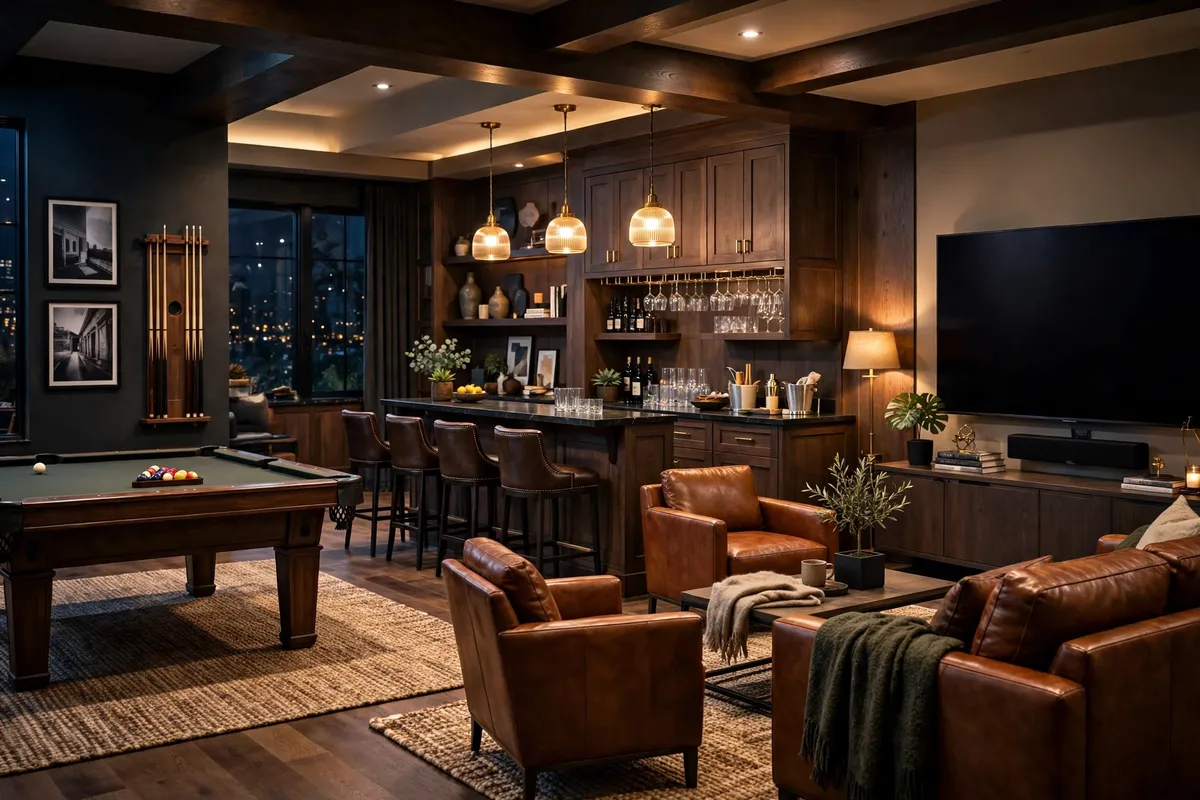
How to Plan Your Man Cave Before You Buy Anything
Every successful man cave starts with five decisions. Get these right and every purchase afterwards becomes easier, cheaper and better looking.
1. Pick One Primary Purpose for the Room
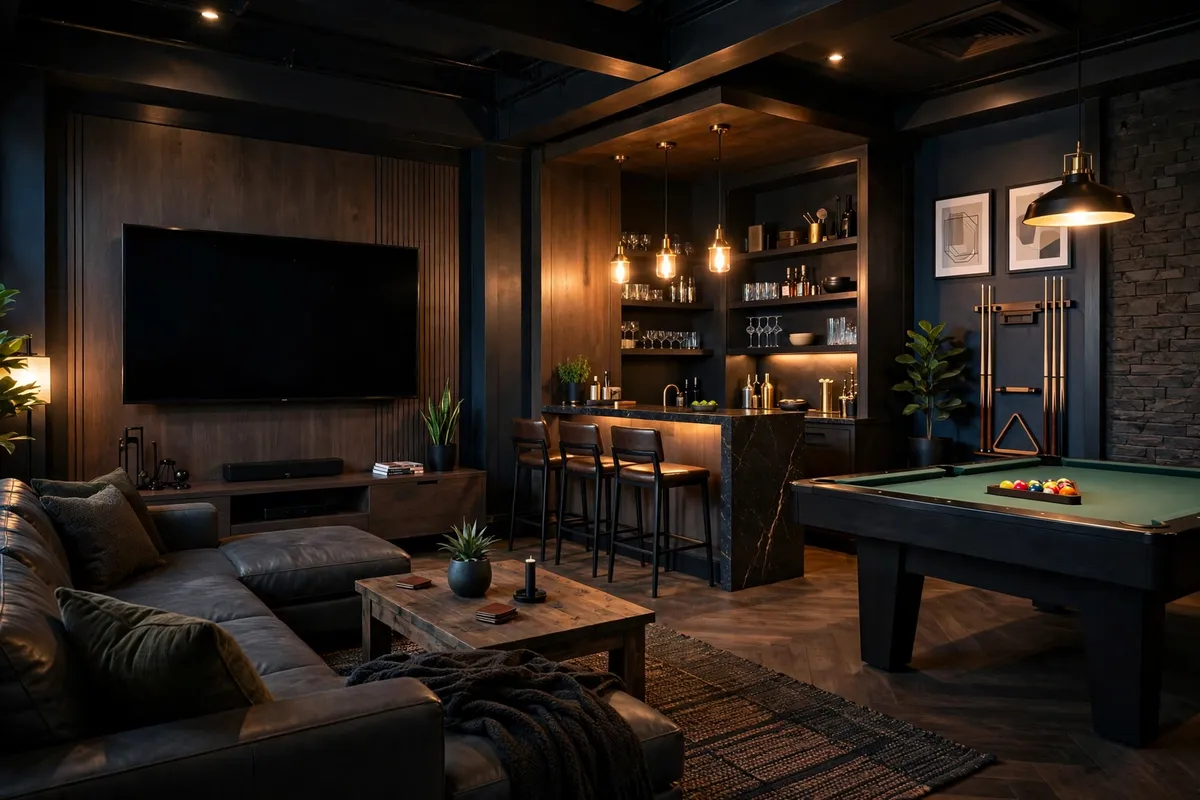
Decide what the room is mainly for: watching sport and movies, gaming, games like pool and poker, a bar for entertaining, or a quiet hobby retreat. Secondary activities can share the space, but one anchor activity should dictate the layout, the biggest purchase and where the seating faces. Rooms that try to do everything equally usually do nothing well.
2. Measure the Room and Draw a Simple Floor Plan
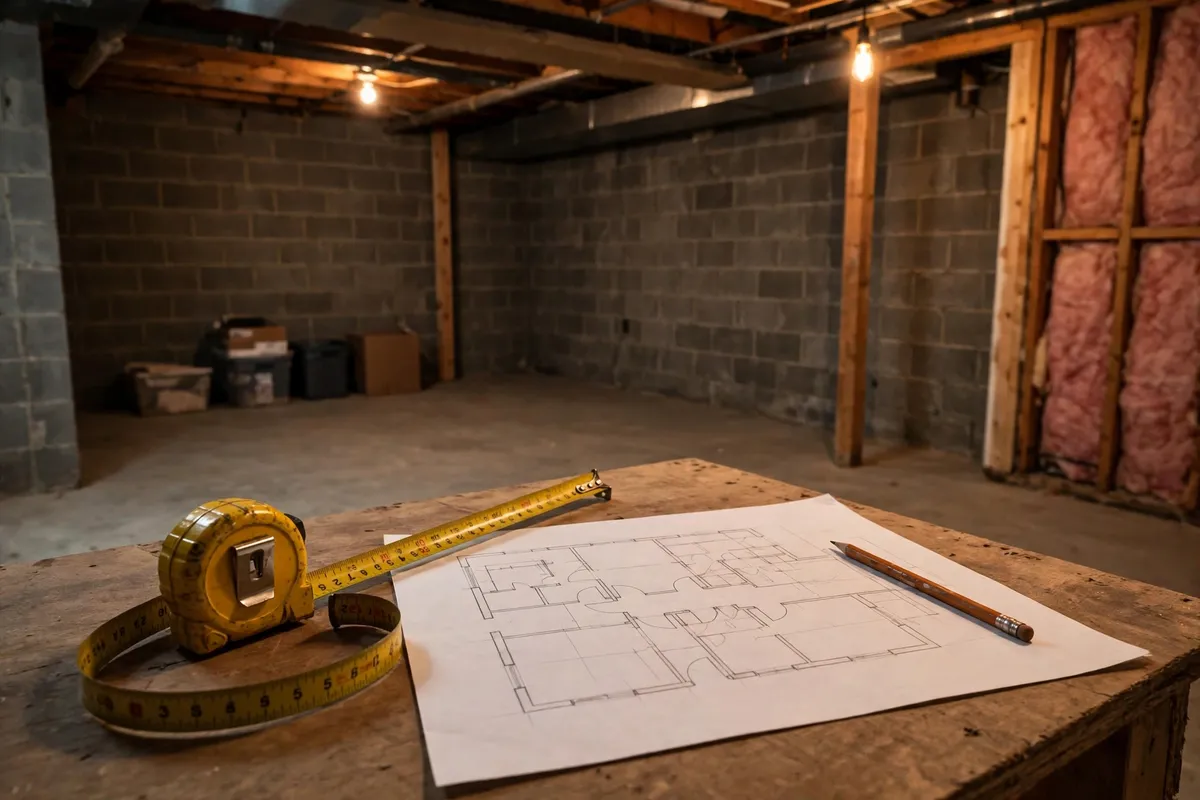
Sketch the room to scale on paper or in a free room-planner app, marking doors, windows, radiators and power outlets. A pool table needs roughly 1.5 metres (5 ft) of clear space on every side for cueing; a projector screen needs viewing distance of about 1.5 times its width. Ten minutes of measuring prevents the classic mistake of a beautiful table that nobody can actually play on.
3. Zone the Space Like a Designer
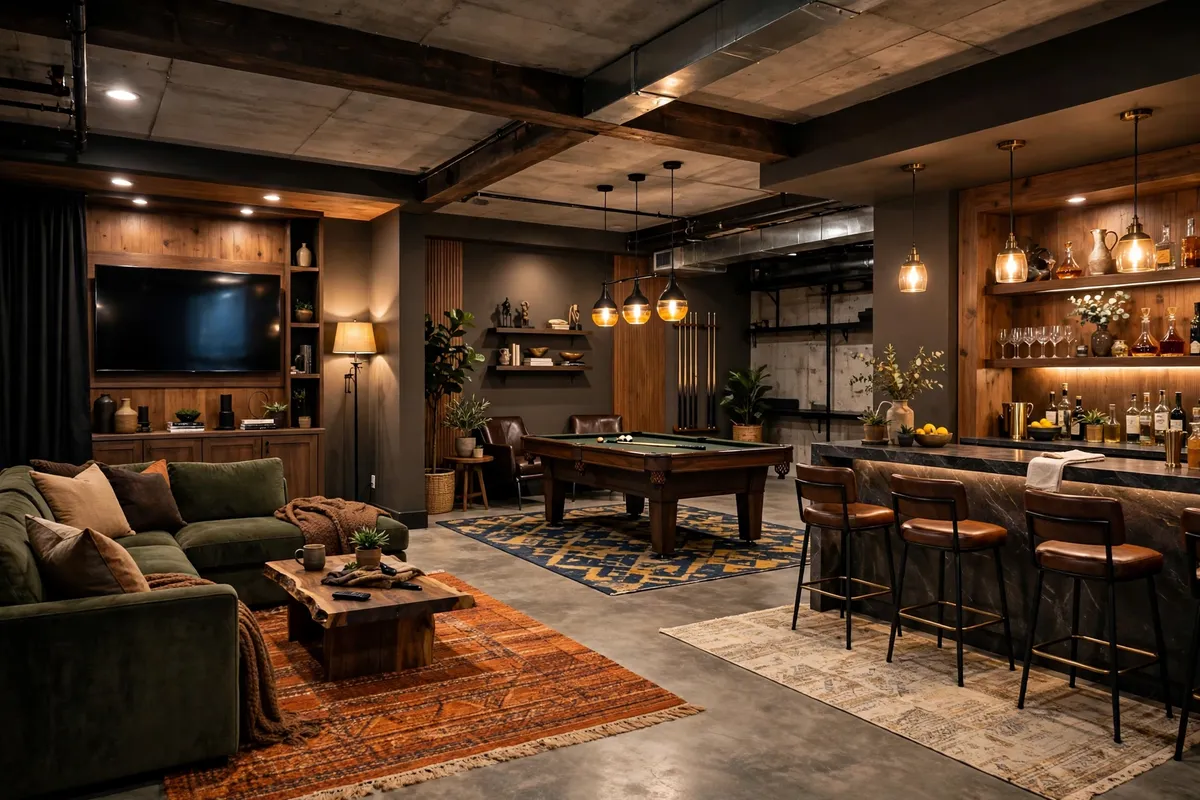
Divide the room into zones: a viewing zone, a games zone, a drinks zone and a quiet zone. Rugs, lighting and low shelving can separate zones without walls. Zoning is what makes a finished basement feel like three rooms in one instead of a warehouse of furniture, and it is the single biggest difference between an average cave and a professional-looking one.
4. Sort the Boring Infrastructure First
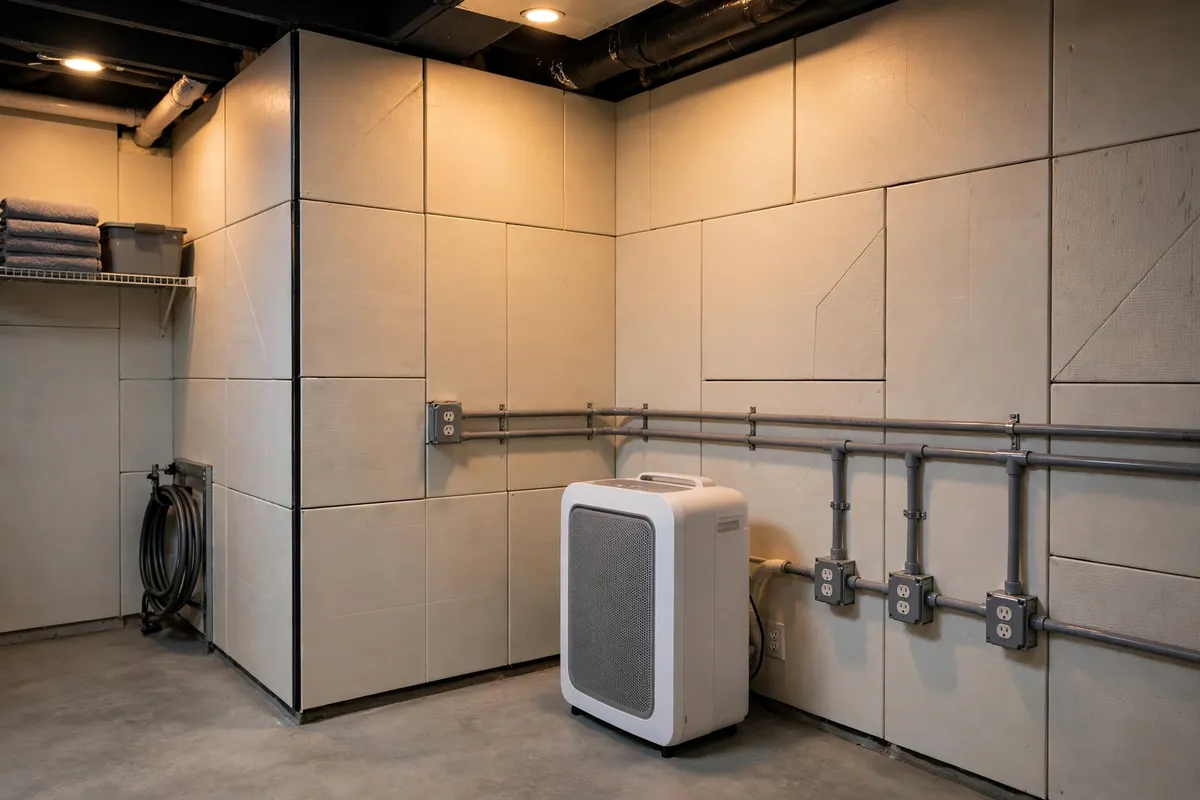
Basements and garages need moisture, warmth and power sorted before leather sofas arrive. If your space sits below ground, read our dehumidifier reviews and run one for a few weeks before installing flooring or electronics. Add more sockets than you think you need, run speaker and network cables while the walls are open, and insulate: a cave that is cold, damp or short of power will never feel finished.
5. Set a Phased Budget and Buy the Anchors First
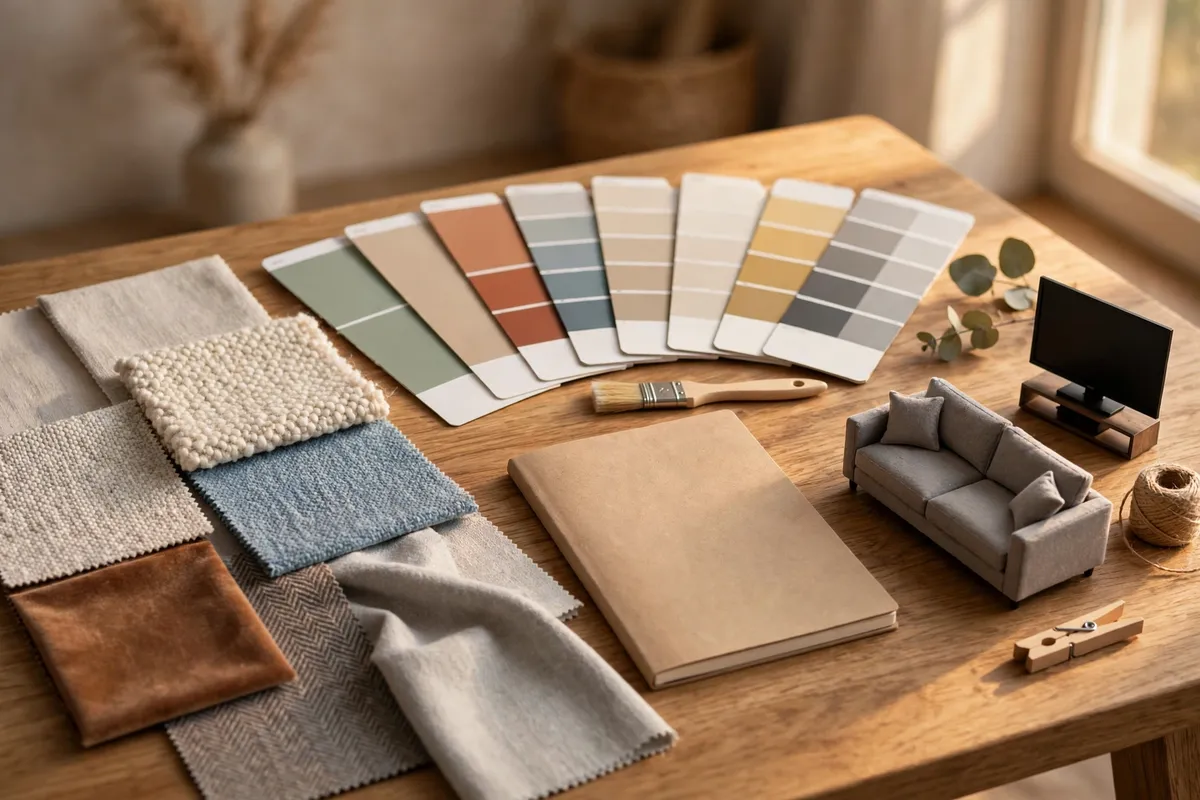
Spend first on the pieces you will use every session: seating, the screen or table, and lighting. Décor, signage and collectibles can be added over months. A sensible split is roughly 40% on the anchor furniture, 30% on electronics, 20% on lighting and flooring, and 10% held back for the finishing touches that make the room feel personal.
Man Cave Bar Ideas
The bar is the social heart of the cave. It does not need plumbing or a huge footprint: a well-chosen counter, cold drinks within reach and somewhere to perch will do the job.
6. Build a Freestanding Home Bar
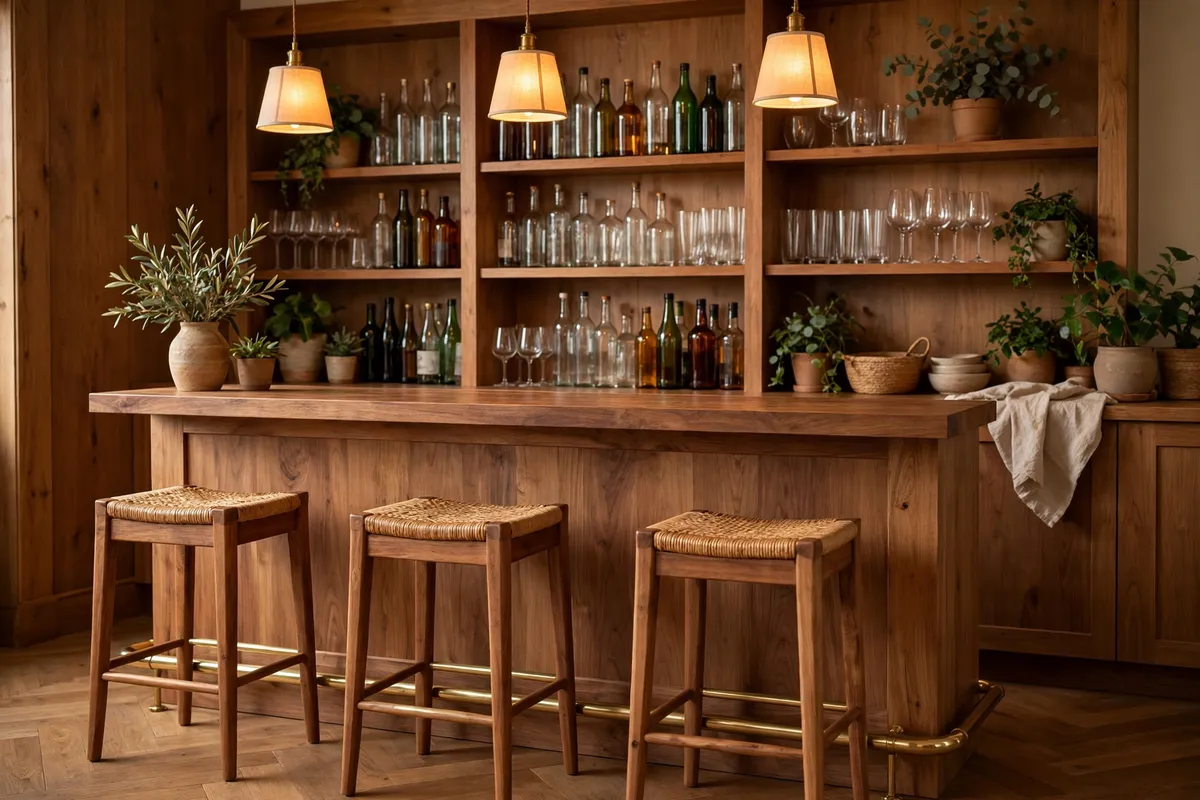
A freestanding bar counter with a foot rail, a worktop behind it for prep, and open shelving for bottles and glassware gives you the full pub experience without building work. Leave at least 90 cm (36 in) of working space behind the counter, and choose a wipe-clean top: spilled drinks are a when, not an if.
7. Add a Dedicated Beverage Fridge
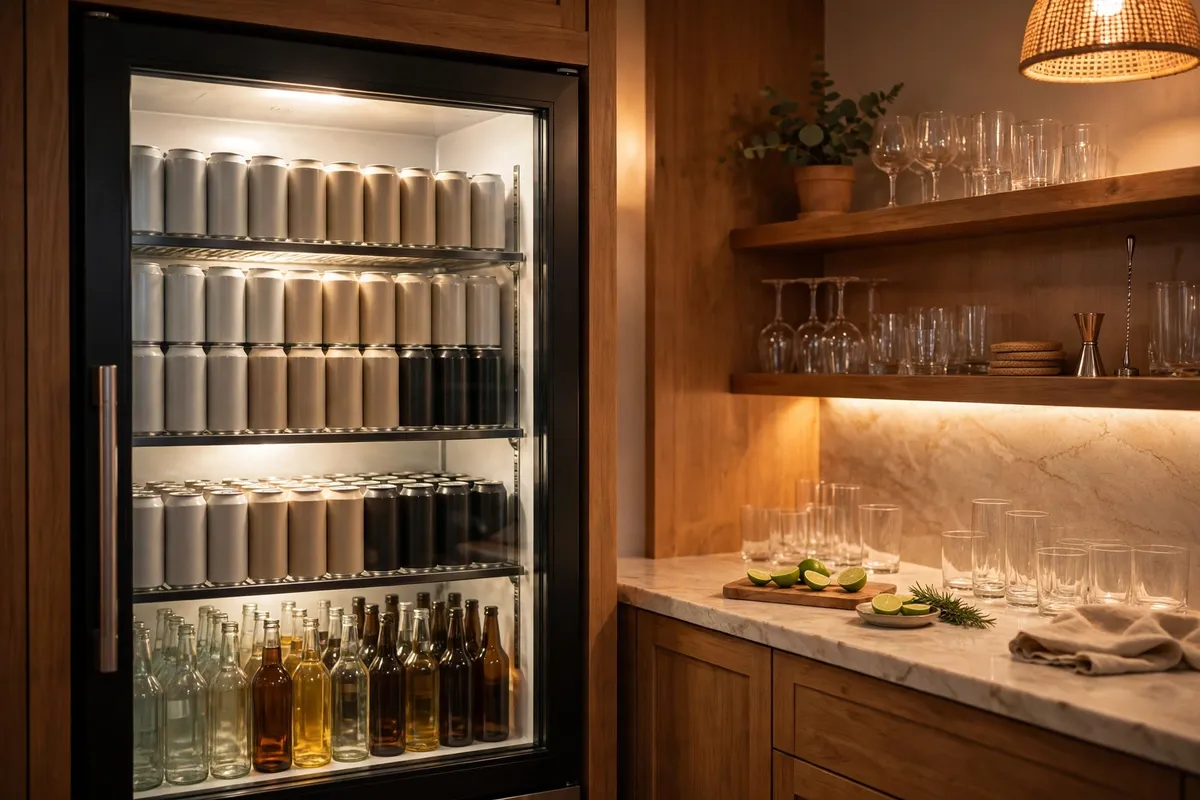
Dragging warm cans from the kitchen kills the atmosphere. A glass-door beverage fridge keeps drinks at serving temperature, shows off the stock and frees up your kitchen fridge. Place it at the end of the bar or under the counter, and leave ventilation space at the back so the compressor is not working against a wall of heat.
Our Pick: Whynter 68-Can Beverage Refrigerator (BR-062WS)
A compact 1.6 cu ft freestanding drinks fridge with a double-layer glass door and stainless-steel trim, sized for up to 68 cans. It is the classic man-cave upgrade: cold drinks on display, no ice runs to the kitchen.
8. Install a Kegerator or Tap Tower
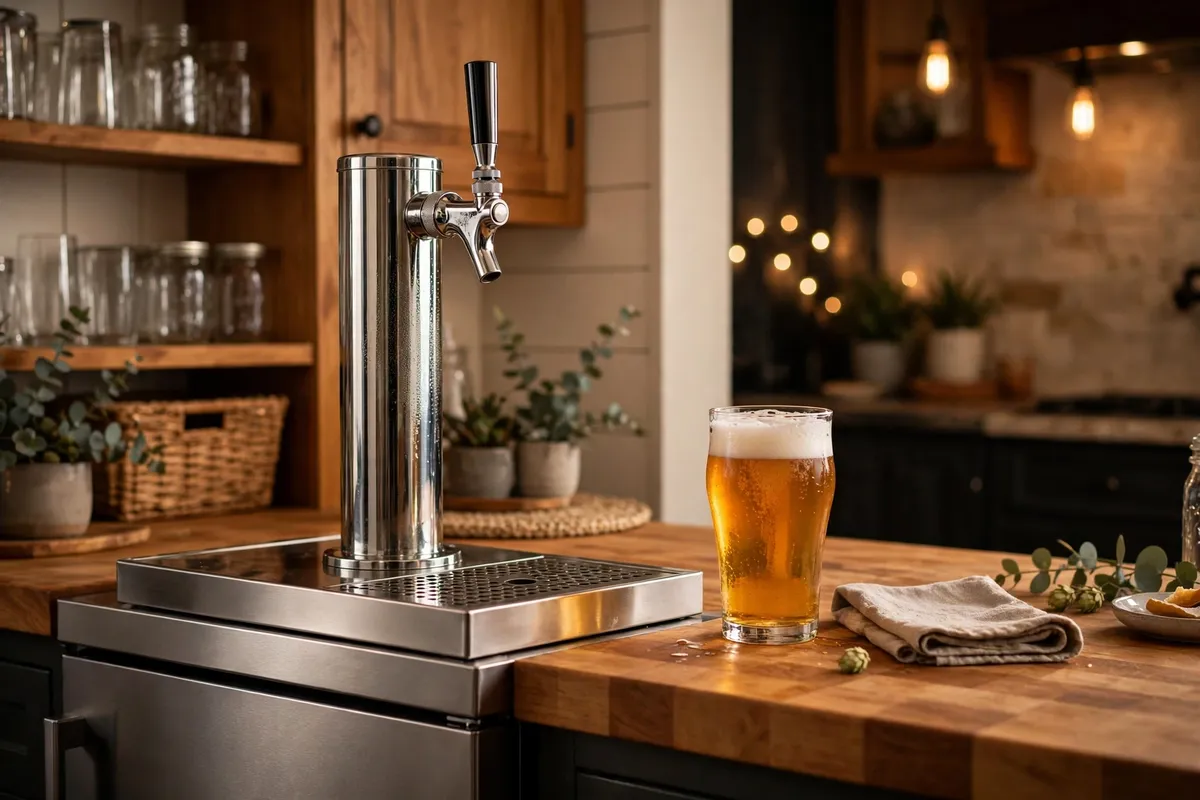
Draft beer at home is the upgrade guests remember. A single-tap kegerator fits under most counters, and a mini keg system is a cheaper, smaller starting point. Keep spare CO₂ and a cleaning kit in the cupboard from day one; a tap that is off for maintenance during the big match is a tragedy in miniature.
9. Create a Whisky and Spirits Tasting Corner
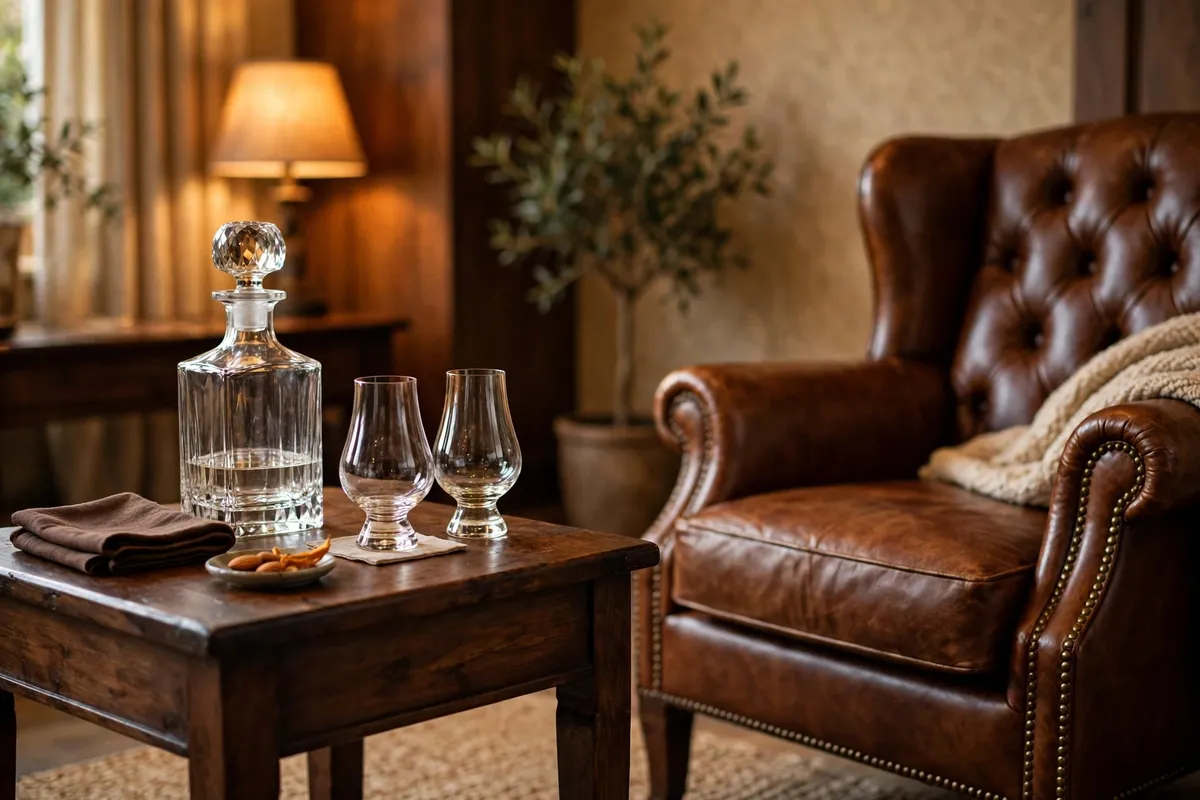
Reserve one shelf or a small cabinet for your best bottles, two proper tasting glasses and a water dropper. A decanter turns an everyday bourbon into a ritual, and a tasting corner gives the cave a grown-up corner that balances the games and screens.
Our Pick: Godinger Whiskey Decanter Globe Set
An 850 ml etched-globe decanter on a wooden stand with two matching etched glasses. It looks like a centrepiece, pours like a decanter should, and makes an excellent gift-to-yourself when the bar is finished.
10. Hang a Wall-Mounted Bottle Opener with a Cap Catcher
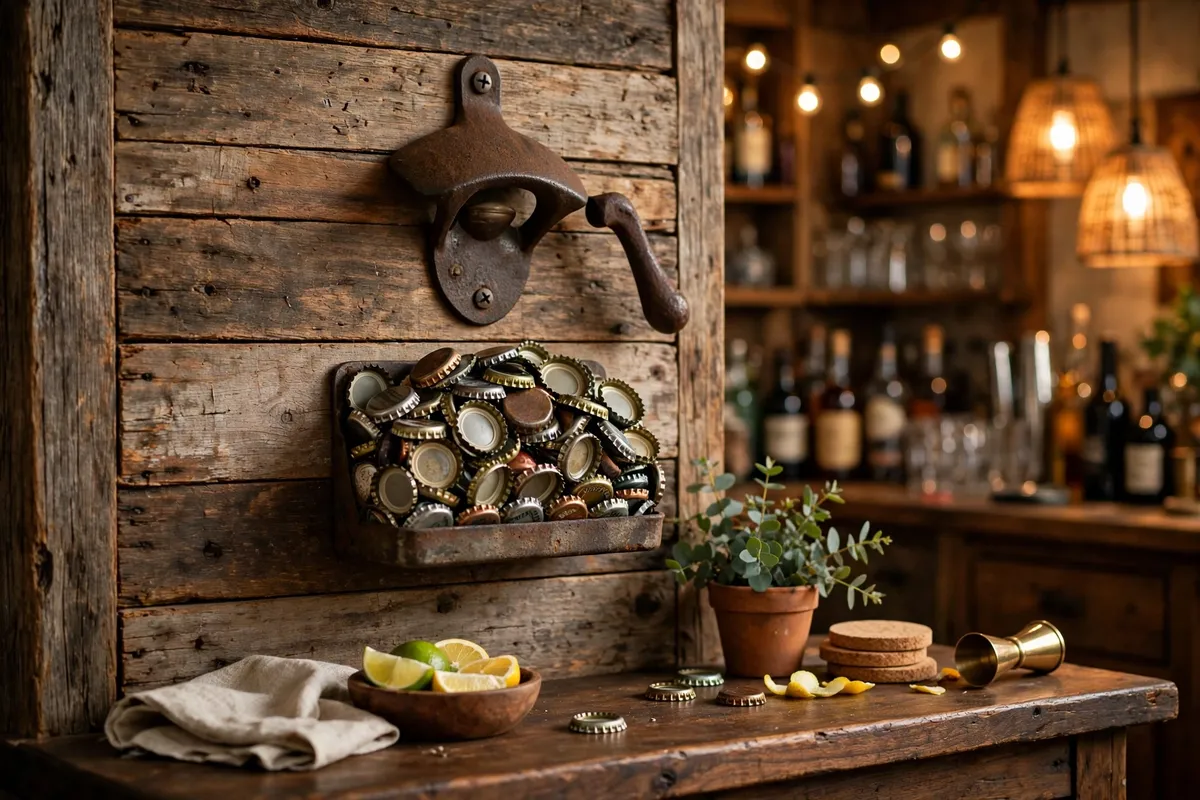
It costs very little, takes ten minutes to fit, and somehow becomes the most-used object in the room. Mount it at the end of the bar, and the magnetic catcher keeps caps off the floor and turns your collection into accidental décor.
Our Pick: LUCYLANKER Wall-Mounted Bottle Opener with Magnetic Cap Catcher
A vintage-style wooden opener that mounts on the wall or fridge, with a magnetic catcher that holds caps as they drop. Small, sturdy and endlessly satisfying.
11. Add a Bar Cart for Flexible Serving

If a fixed bar will not fit, a two-tier bar cart does 80% of the job and can be wheeled to wherever the party is. Style it like a stylist: bottles on top with labels facing out, tools and garnishes below, and nothing else. For more serving and seating ideas that travel well, our portable stadium seat guide shows the same buy-once, use-everywhere thinking.
12. Put the Bar Rules on the Wall
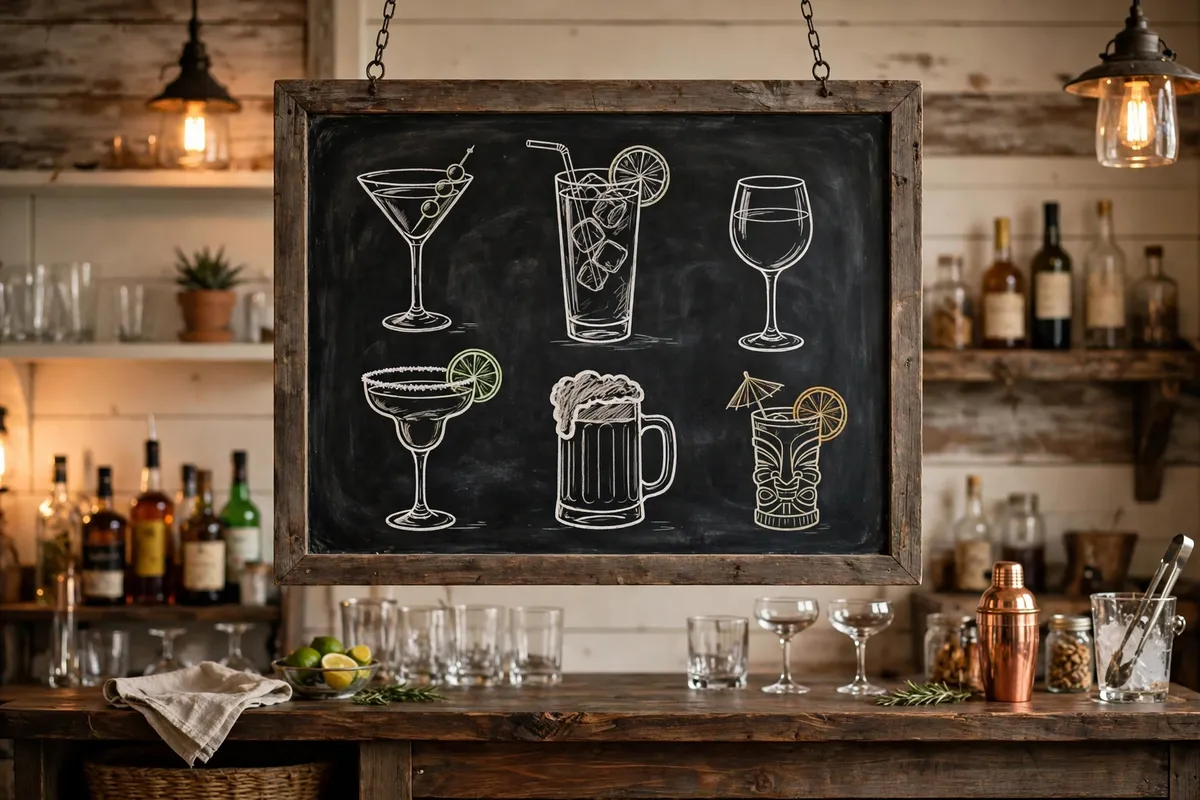
A chalkboard or letter board with house rules, the drinks list or the score predictions adds humour and gives the bar a focal point. A board also doubles as a scoreboard on games night, and our glow-in-the-dark dry erase marker picks are made for exactly that job under cave lighting.
Gaming Man Cave Ideas
13. Build a Multi-Screen Gaming Wall
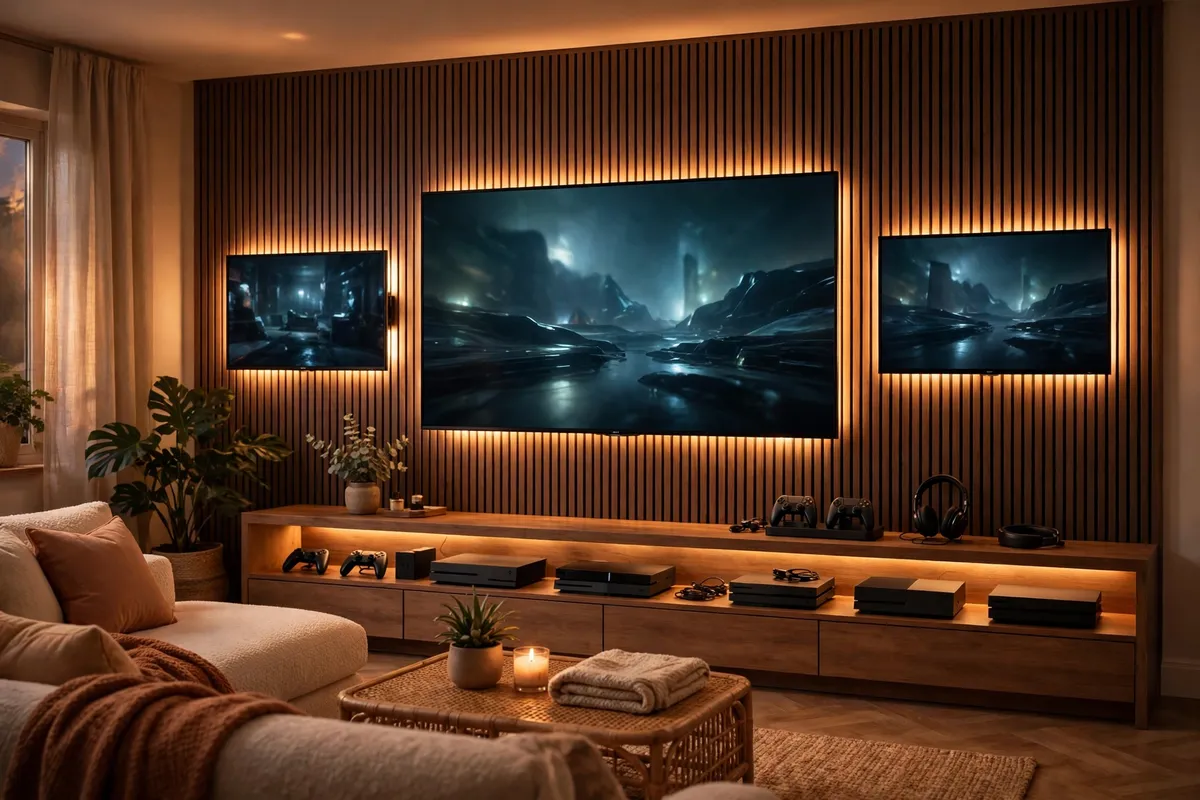
One large TV for the main game, flanked by a smaller screen for sport, streams or a second player, is the modern gaming cave signature. Mount screens on a single wall plate run so cables disappear, and feed everything from one hub. Fast, stable networking matters more than another console, so it is worth reading our Wi-Fi 7 router review and Nighthawk AX5400 review before blaming your console for lag.
14. Choose a Proper Gaming Chair
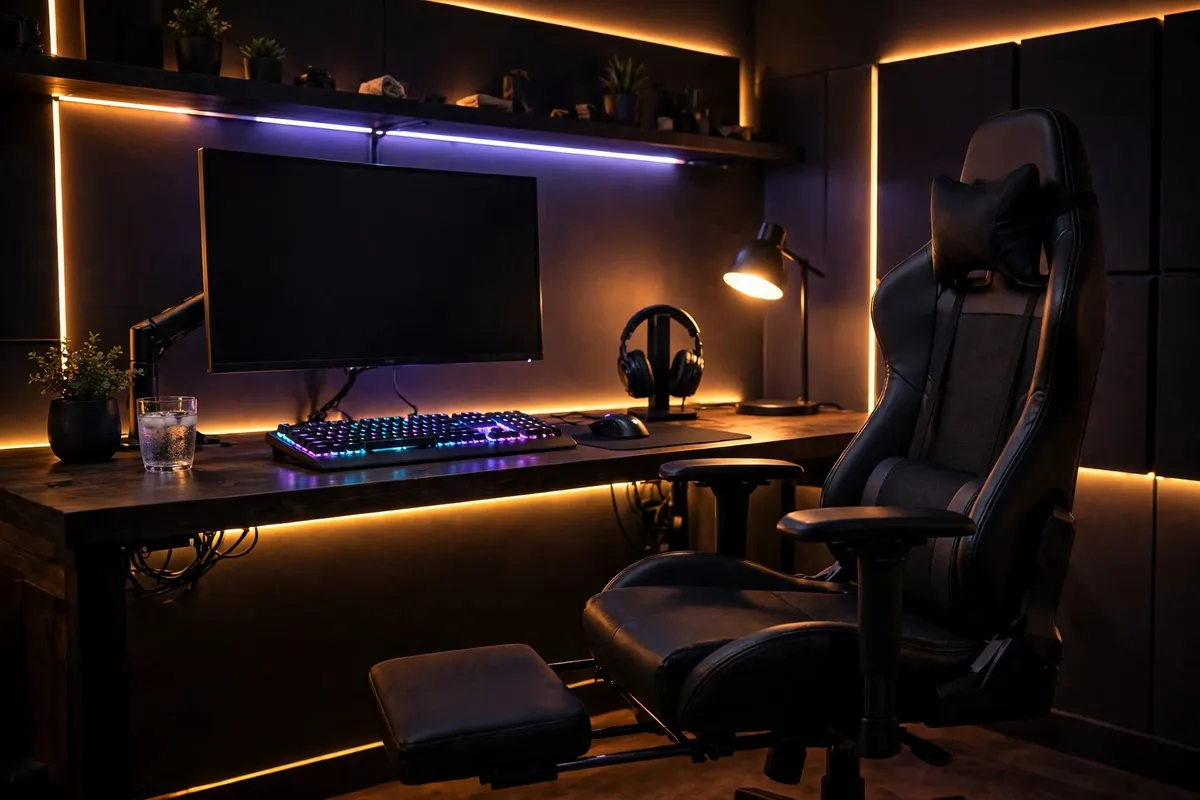
Long sessions punish cheap seating. A gaming chair with lumbar support, a reclining back and a footrest keeps you comfortable through a full evening and looks the part under LED lighting.
Our Pick: Homall Gaming Chair with Footrest and Massage Lumbar Support
PU-leather gaming chair with a slide-out footrest, massage lumbar cushion, 135° recline and 360° swivel, rated to 300 lbs. It anchors a gaming desk or a console corner equally well.
15. Add a Retro Arcade Cabinet
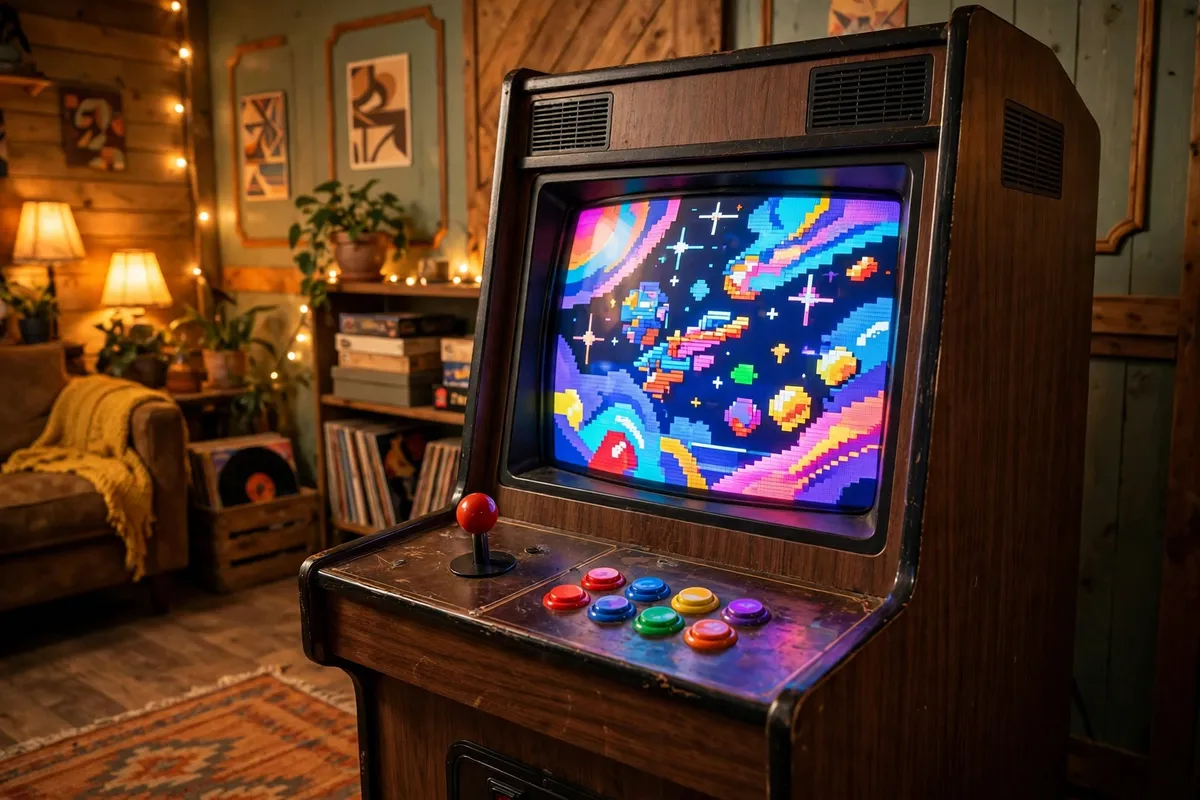
One arcade cabinet delivers more nostalgia per square foot than anything else you can buy. Stand-up cabinets with licensed classics become the room’s magnet: nobody walks past one without playing.
Our Pick: Arcade1Up Street Fighter II Classic 3-in-1 Home Arcade Cabinet
A three-quarter-scale licensed cabinet with riser, loaded with Street Fighter II editions. It is furniture, décor and entertainment in a single box, and the first thing guests ask about.
16. Create a Retro Console Shelf
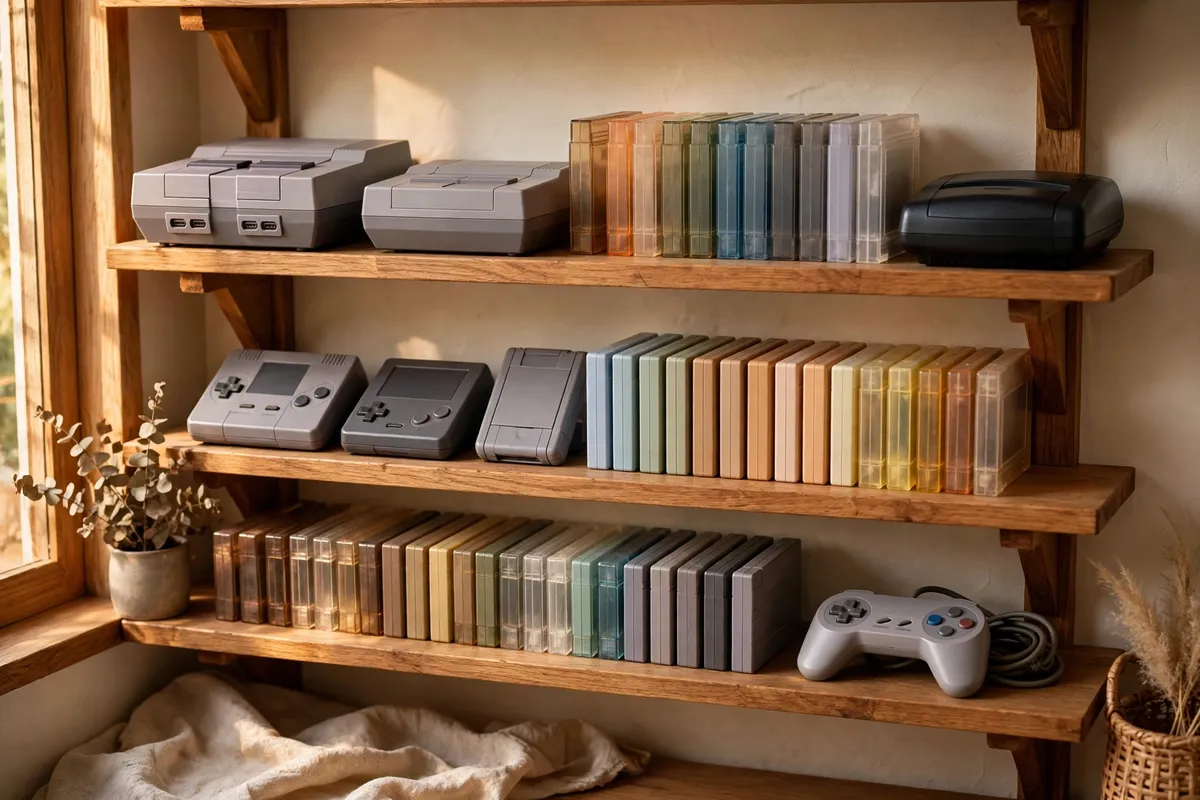
Dedicate one shelf to retro consoles and cartridges, displayed like collectibles rather than stored like clutter. If you are starting the collection, our Atari Flashback 12 Gold review covers an easy plug-and-play way in, and our LEGO Classic review is a reminder that display-worthy hobbies belong on shelves, not in boxes.
17. Set Up a Racing or Flight Sim Corner
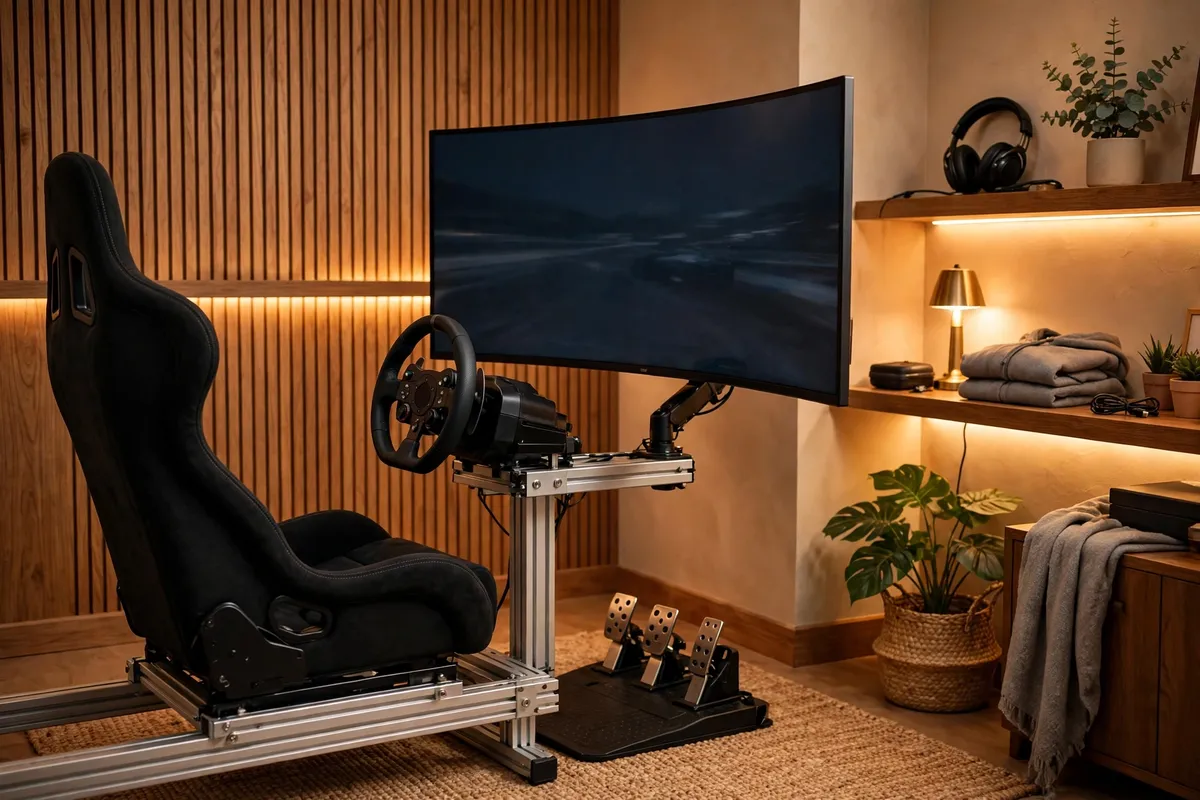
A wheel stand, a single seat and one screen in the corner creates a second “ride” in the room without taking it over. Fold-away wheel stands exist for small caves; a fixed rig is better if you have the floor space and a dedicated seat.
18. Plan a Board Games and Card Table Zone
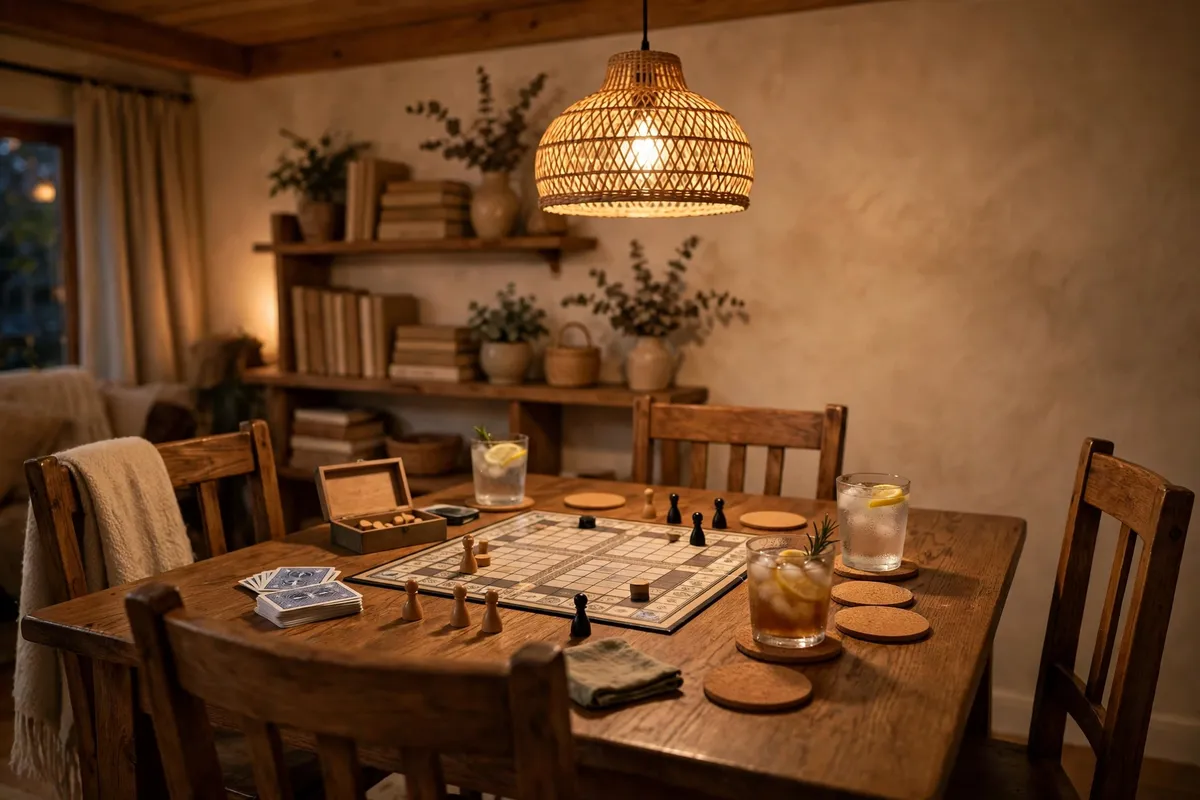
Screens off, cards out: a simple table with four comfortable chairs and a pendant light becomes the poker, board-game and trivia zone. Our two-player Monopoly guide is a good place to start the games shelf, and a table that seats six covers almost every game ever made.
19. Hide the Cables Like a Professional
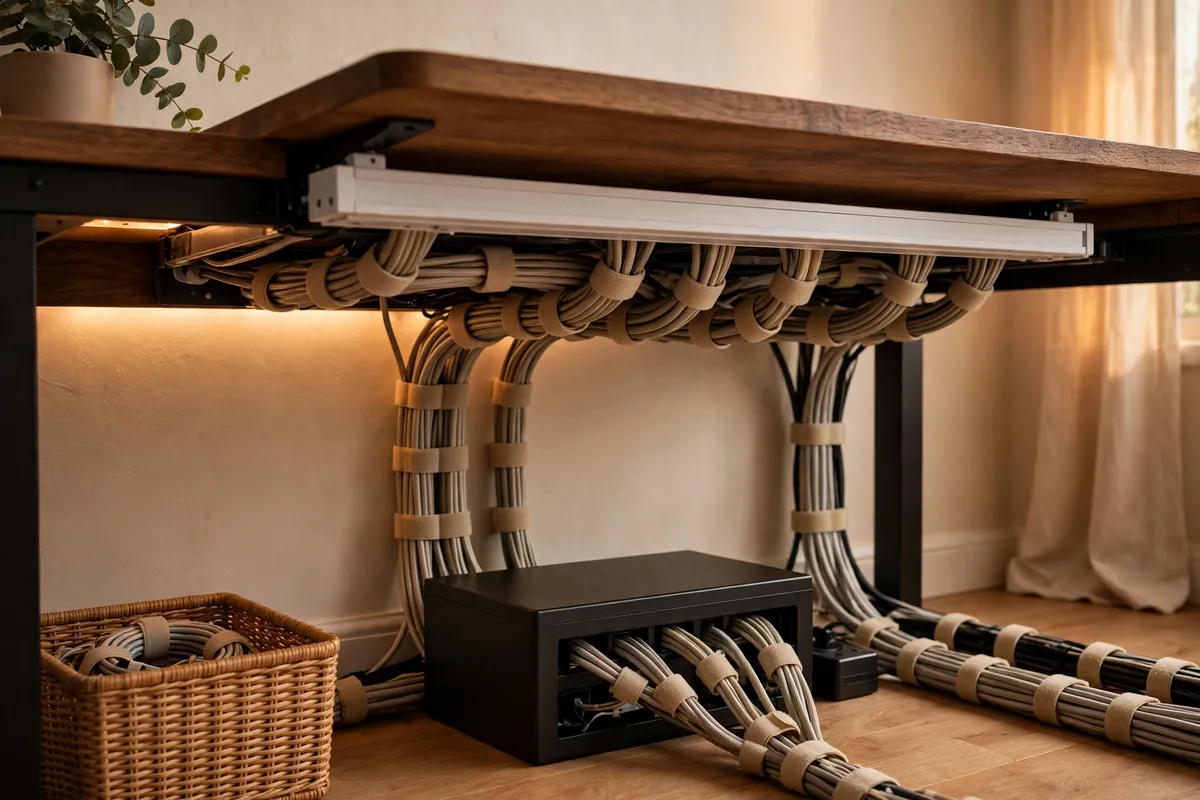
Nothing cheapens a gaming setup faster than a nest of cables. Use a cable-management box under the desk, raceway trunking along the skirting, and Velcro ties instead of zip ties so you can re-route later. Label both ends of every cable once, and future-you will be grateful.
Home Theater Man Cave Ideas
20. Go Big with a Projector and Screen
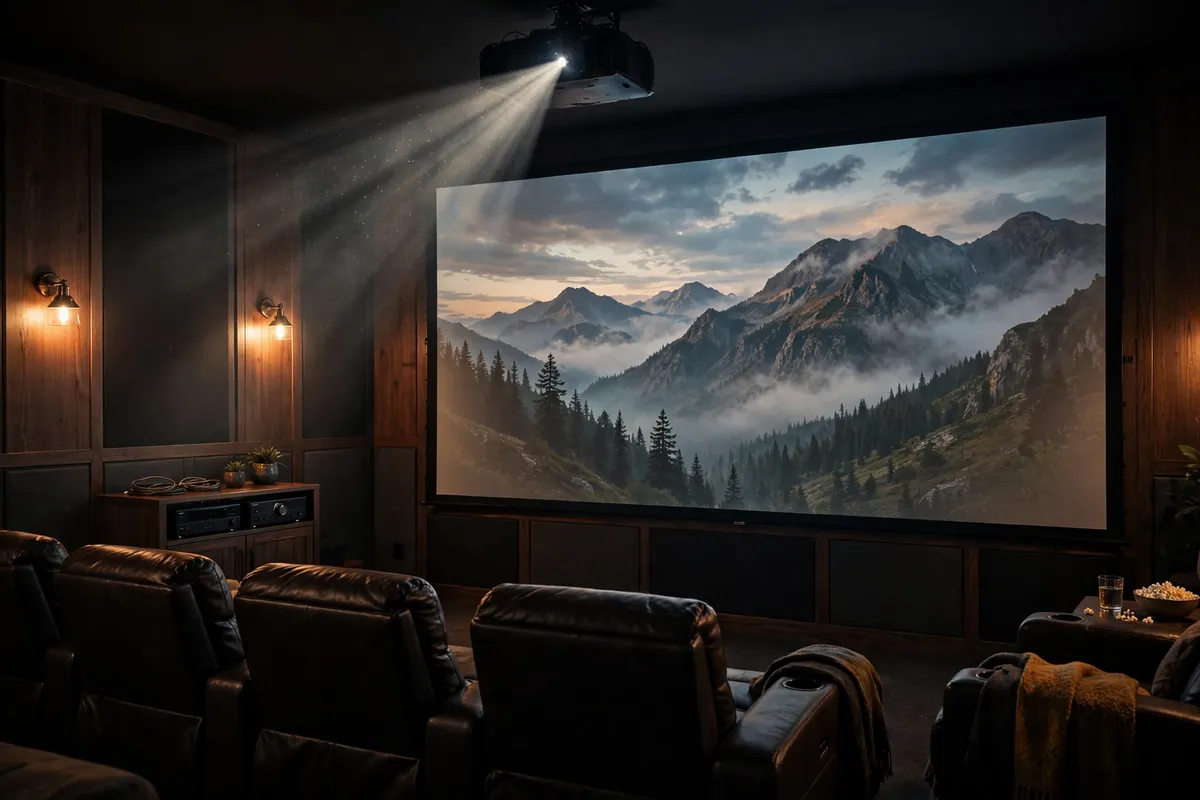
Above 100 inches, a projector beats a TV for pure cinema feel and often costs less per inch. Pair it with a fixed-frame or painted screen, blackout the windows, and sit 3 to 4 metres back for a 120-inch image.
Our Pick: Optoma HD39HDR Home Theater Projector
A bright 4,000-lumen 1080p projector with HDR input support and a 120 Hz mode gamers appreciate. Bright enough for sport with some ambient light, and properly cinematic with the lights down.
21. Or Choose One Very Large TV
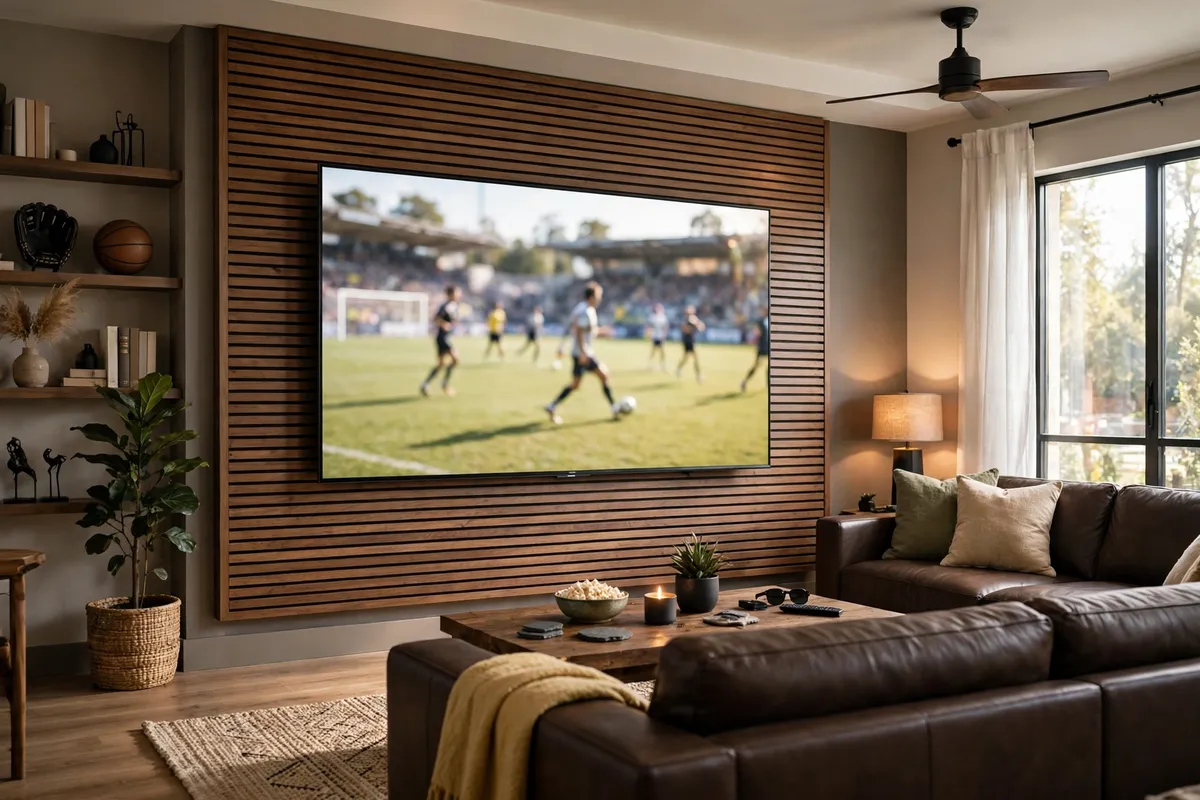
If your cave has windows you cannot blackout, a large modern TV is the pragmatic choice: brighter, simpler and better for daytime sport. Wall-mount it at eye level from the main seats, not above a fireplace, and run the cables in the wall or in paintable trunking.
22. Upgrade the Sound Before the Picture
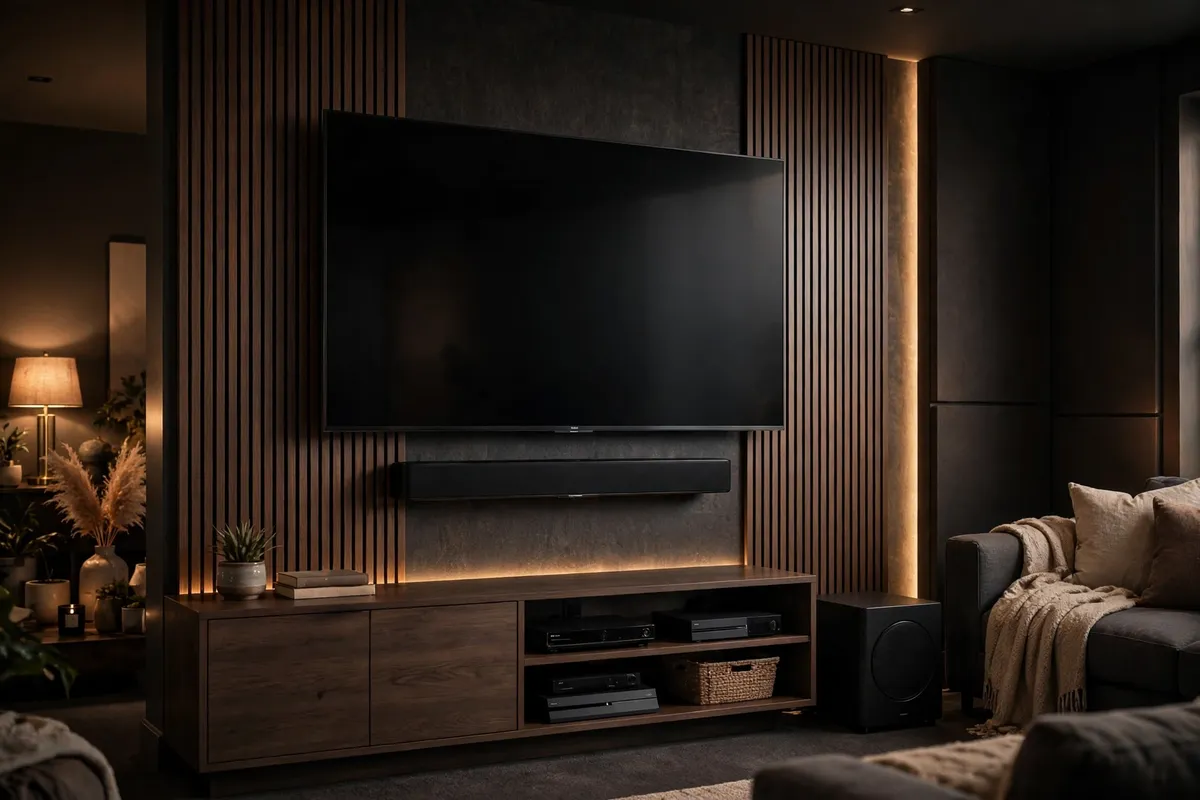
Audiences forgive a modest screen; they never forgive thin sound. Start with a soundbar, then grow into separates when budget allows. Our Yamaha RX-V385 review shows what an entry-level AV receiver adds when you are ready for true surround sound.
Our Pick: Samsung HW-S60B 3.1ch Soundbar
A compact Dolby Atmos soundbar with DTS Virtual:X, adaptive sound and a game mode. It is the fastest one-box upgrade from TV speakers to room-filling movie sound.
23. Add Tiered Seating with a Simple Riser

A plywood riser platform 15 to 20 cm (6 to 8 in) high under the back row transforms a flat room into a cinema. Carpet the riser, add LED step lighting for safety, and the second row suddenly has the best view in the house instead of the back of someone’s head.
24. Treat the Room Acoustically
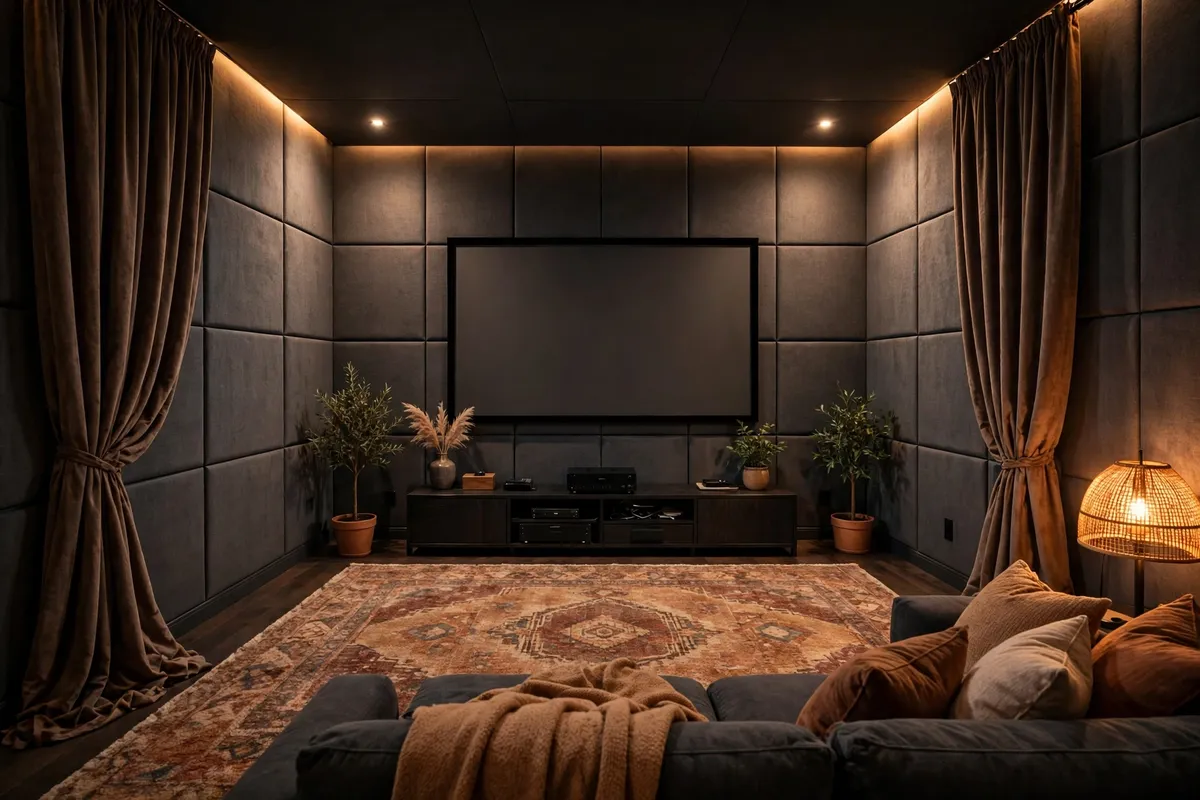
Bare walls echo. Thick curtains, a large rug, upholstered seating and a few fabric acoustic panels at the first reflection points will tighten dialogue and bass more than a pricier speaker would. If outside light is also a problem, blackout curtains solve both at once, and our frosted contact paper guide covers the privacy side for street-facing windows.
25. Install a Snack and Popcorn Station
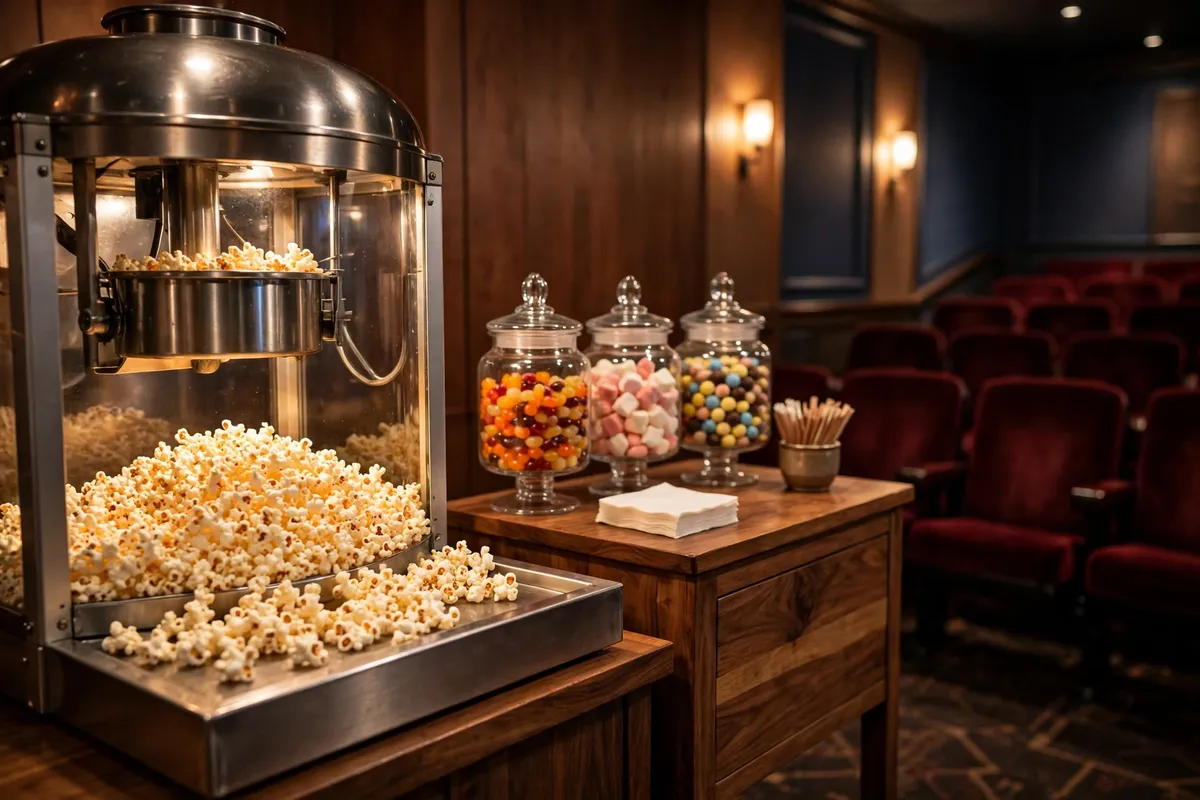
A small counter or sideboard with a popcorn maker, sweet jars and a mini fridge completes the cinema illusion and keeps sticky hands away from the bar. It is also the easiest idea on this list to add later, so it makes a perfect phase-two project.
Games Room and Sports Man Cave Ideas
26. Make a Pool Table the Centrepiece
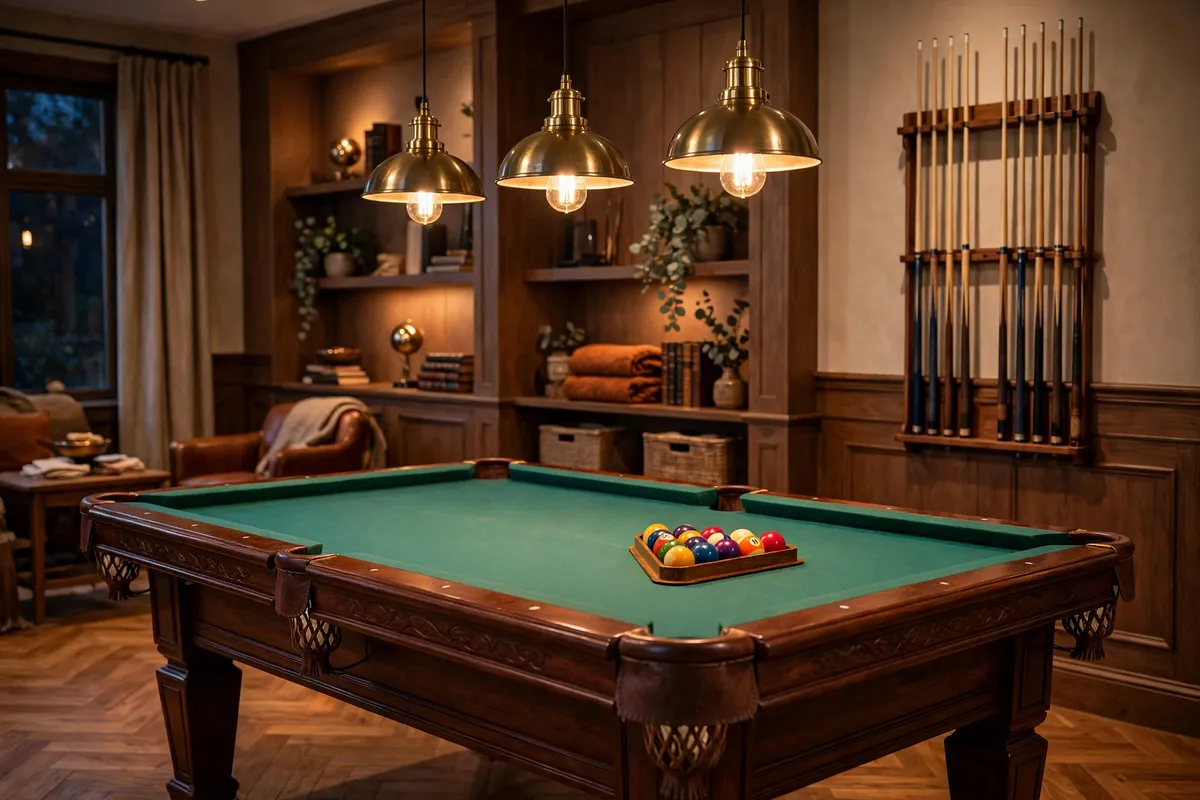
A 7 or 8 ft table, a proper pendant light above it and cue storage on the wall: this is the classic cave for a reason. Measure your cueing space honestly (see idea 2), keep the felt brushed and covered, and read our pool table pocket reducer guide if you want to sharpen your game on the table you already own.
27. Add a Dartboard Cabinet

Darts needs one wall, a cabinet to protect it, and a throw line 2.37 m (7 ft 9¼ in) from the board. An electronic board scores for you, softens missed darts and offers dozens of game variants for guests.
Our Pick: Viper 800 Electronic Dartboard
A regulation-size electronic dartboard with an extended scoreboard and game variants including Spanish Cricket. Ideal for a games wall where nobody wants to keep score by hand.
28. Host Poker Night on a Real Poker Table

A folding poker top on your games table, or a dedicated oval with a padded rail, turns a casual card game into an event. The chips matter more than the table: weighted chips feel right and stack properly.
Our Pick: Fat Cat Texas Hold’em 500-Count Poker Set
500 clay-composite 11.5 g chips in an aluminium case, with cards and dealer buttons included. Everything poker night needs, in one case that stores under the bar.
29. Fit a Foosball or Table Tennis Table
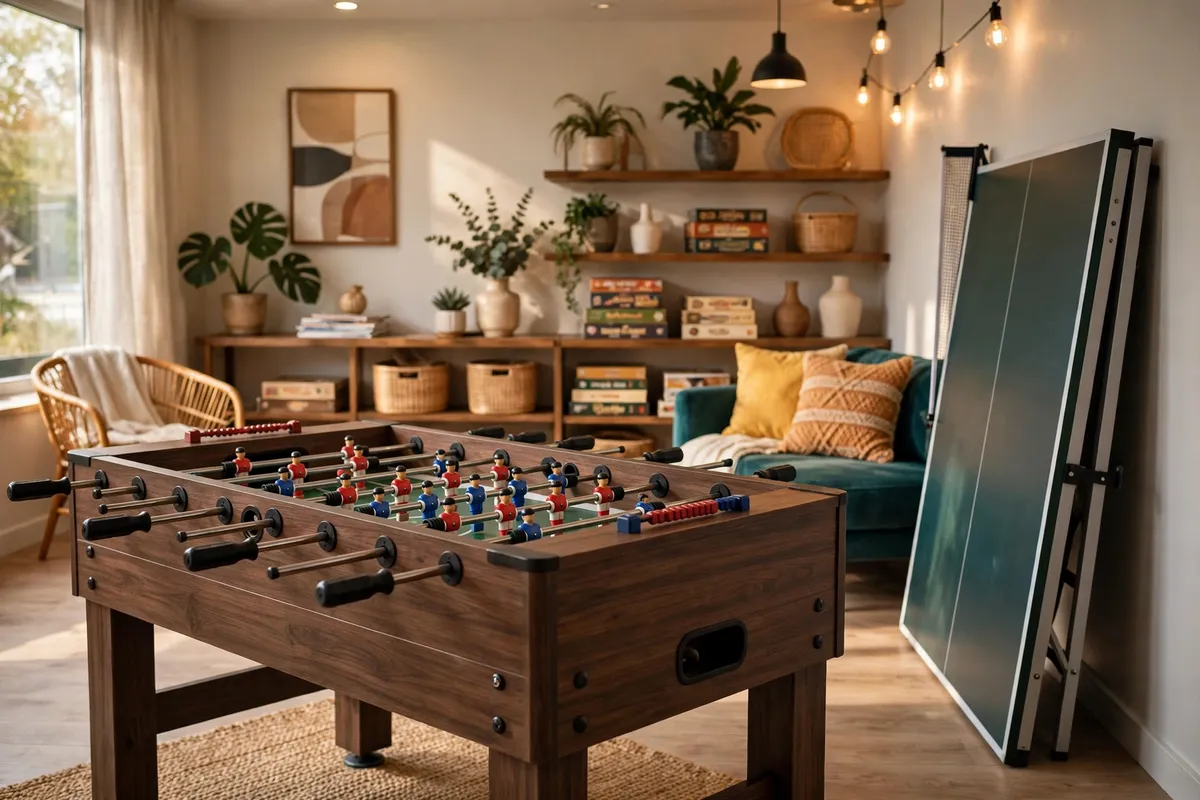
Foosball suits smaller rooms and louder evenings; a table-tennis top that sits over the pool or dining table gives you two games in one footprint. Both are social in a way screens are not, and both get used by guests who never touch a console.
30. Build a Sports Memorabilia Wall
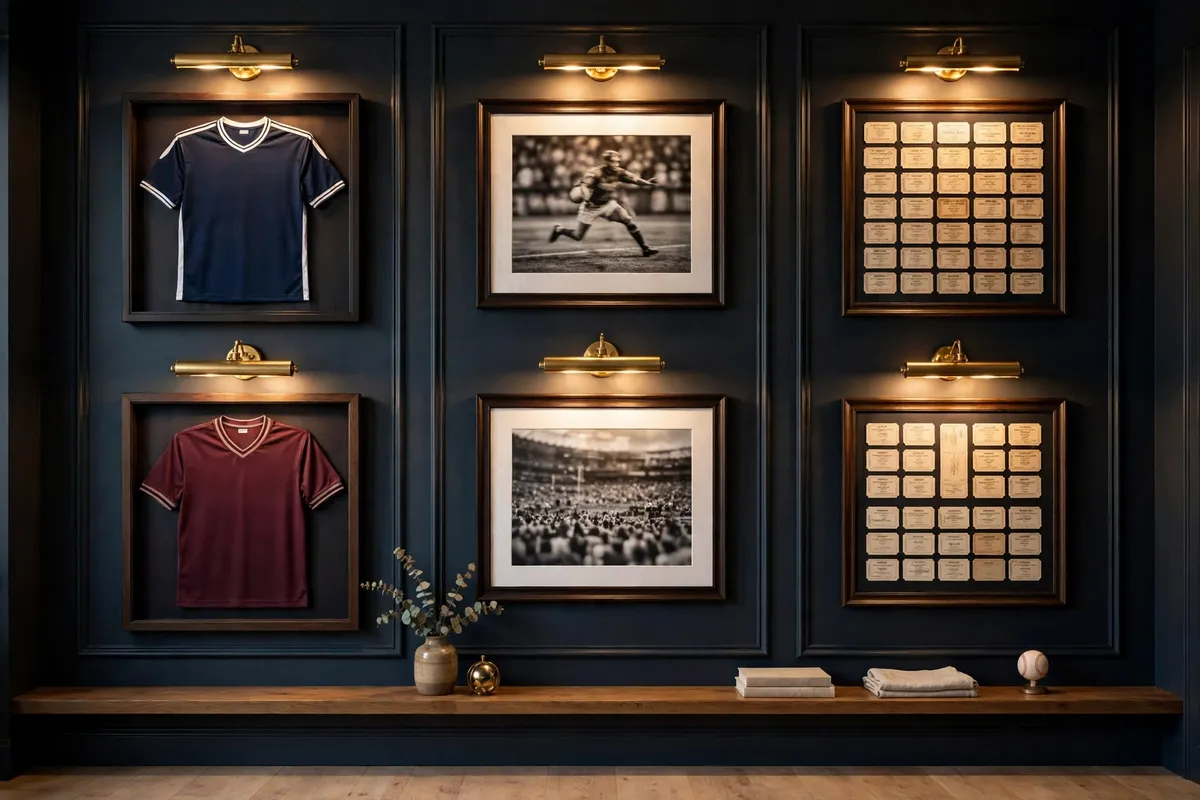
Frame the jerseys, tickets and photos instead of pinning them. A single dark-painted wall with evenly spaced frames looks like a gallery; the same items scattered look like clutter. Group by team or by era, light the wall with a picture light or spots, and leave gaps for future glories. If you are decorating a mantel as part of the display, our year-round mantel garland ideas keep it looking intentional between match days.
31. Create a Match-Day Command Centre
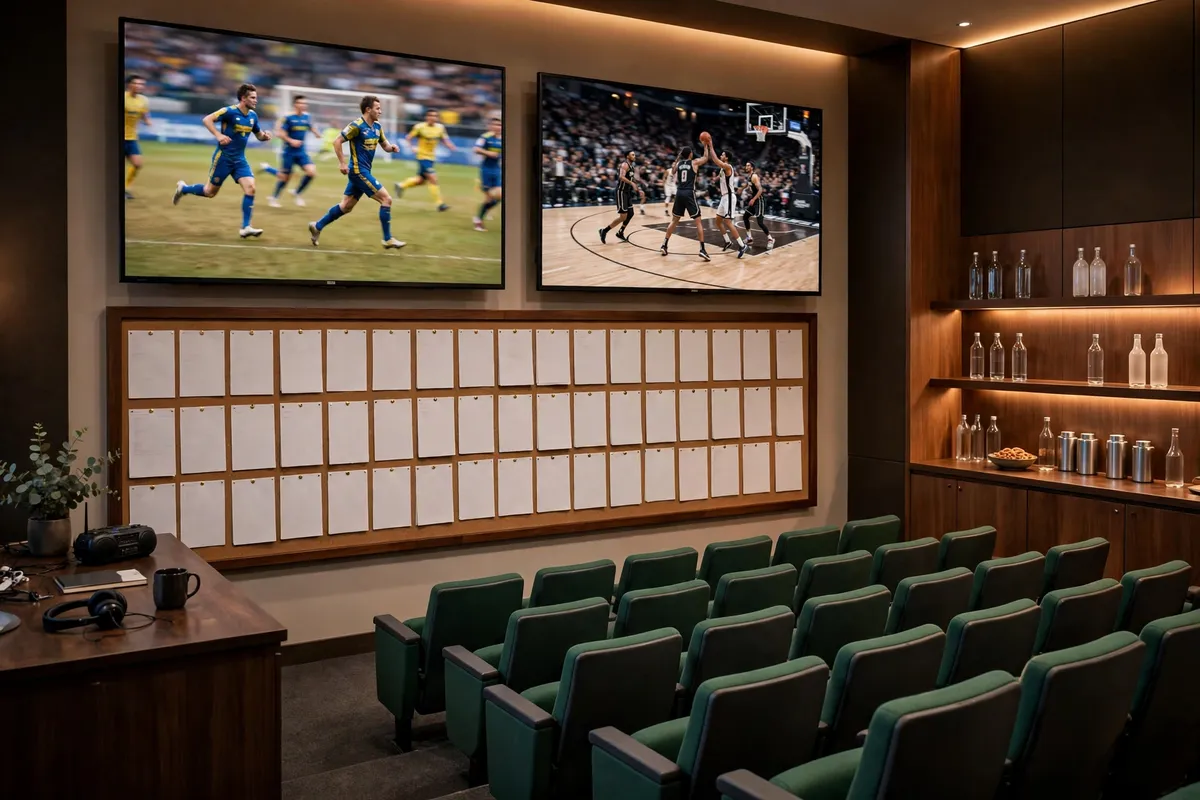
Combine the sports wall with a second screen for other fixtures, a fixture-list board and seating angled for conversation as much as viewing. Add a drinks shelf within arm’s reach of the main seats and nobody has to miss a goal on a fridge run.
32. Add a Mini Fitness Corner

A rack of dumbbells, a mat and a pull-up bar in the unused corner keeps the cave honest. Our captain’s chair gym equipment reviews and pull-up bar coverage will help you choose kit that fits a corner rather than a gym.
Seating and Comfort Ideas
33. Invest in Recliner Seating First

If the budget forces a choice, buy the seats before the screen. A supportive recliner with cup holders and USB charging is where every hour in the cave is actually spent. Start with our MCombo recliner reviews for tested options, and keep them running for years with the parts in our recliner replacement parts guide.
Our Pick: Homall PU Leather Recliner Chair
A padded single recliner in black PU leather, sized for living rooms and theater rows alike. An affordable way to give every seat in the front row the recliner treatment.
34. Choose a Deep Sectional for Group Viewing
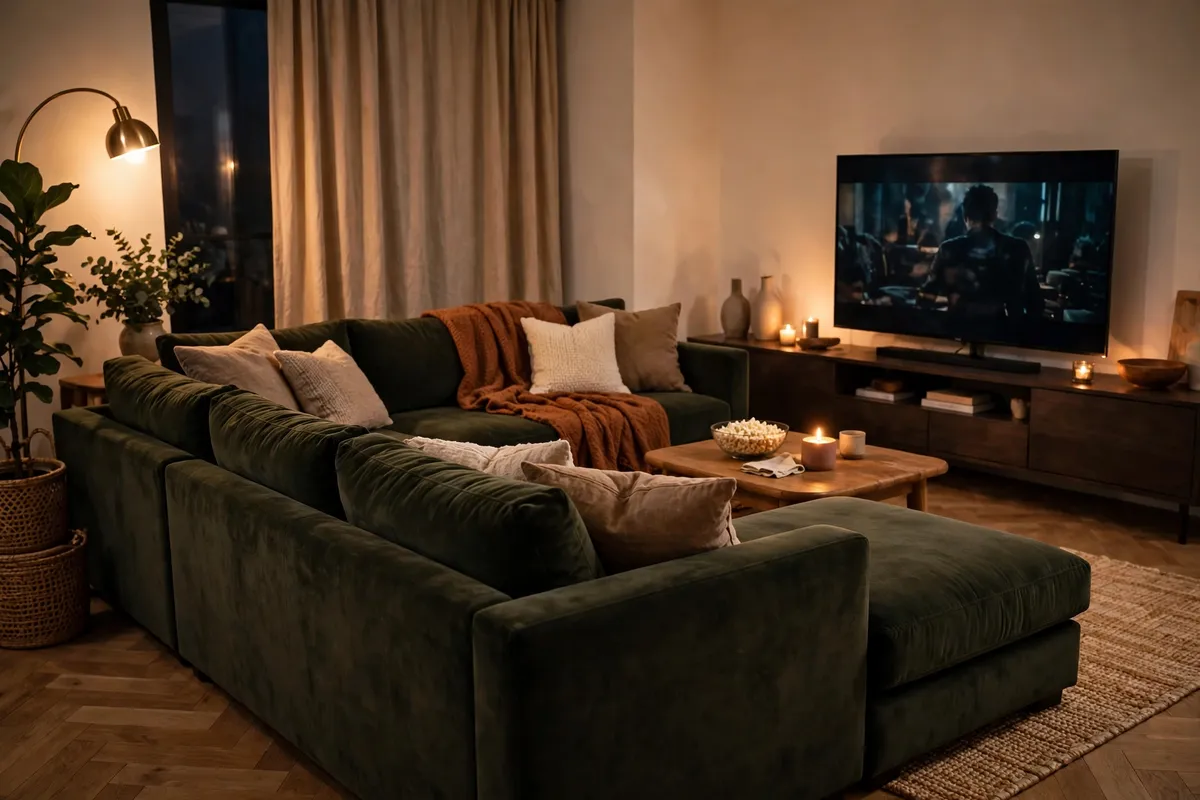
For sport and family film nights, a deep L-shaped sectional seats more people more comfortably than a row of chairs. Choose performance fabric if drinks and snacks are regular guests, and add a chaise end: it will be fought over.
35. Add Bar Stools That Match the Bar Height
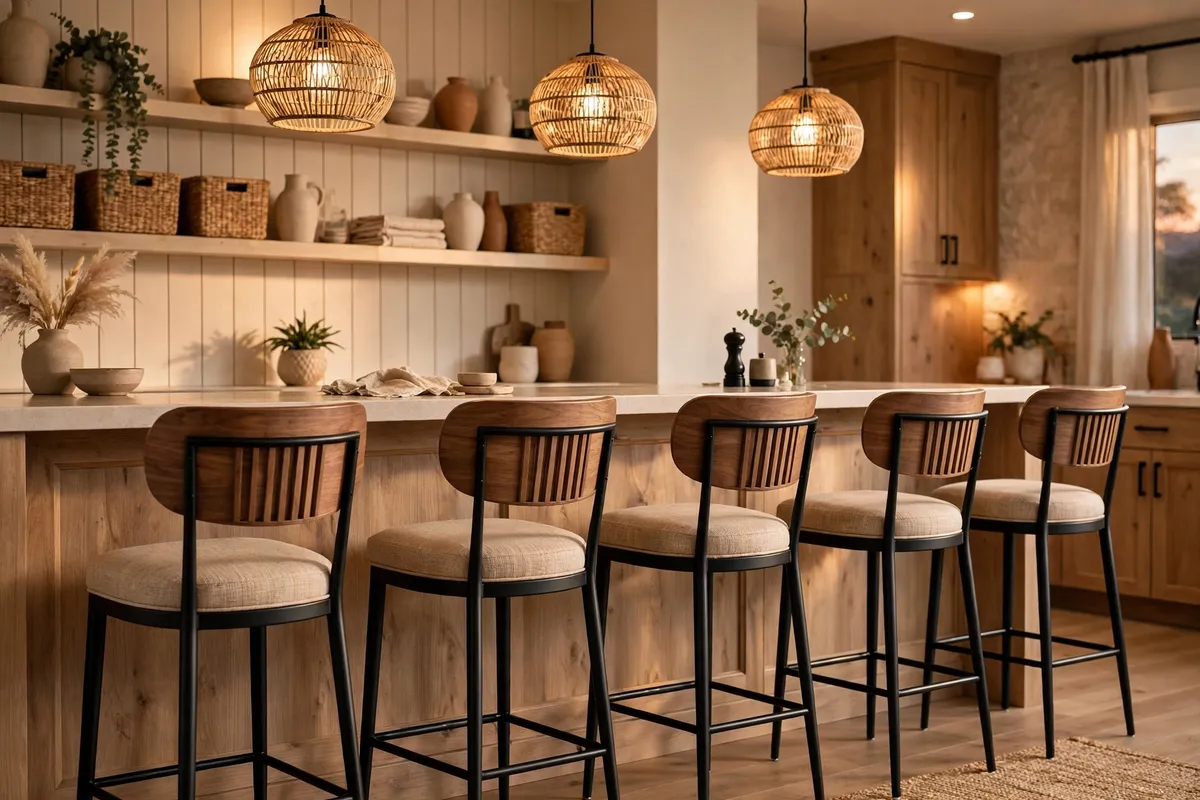
Counter stools (about 65 cm / 26 in seat height) for a worktop-height bar, taller stools for a raised bar top. Backless stools tuck away in small caves; backed stools win for long evenings. Buy one more than you think you need.
36. Layer in a Rug, Throws and Cushions
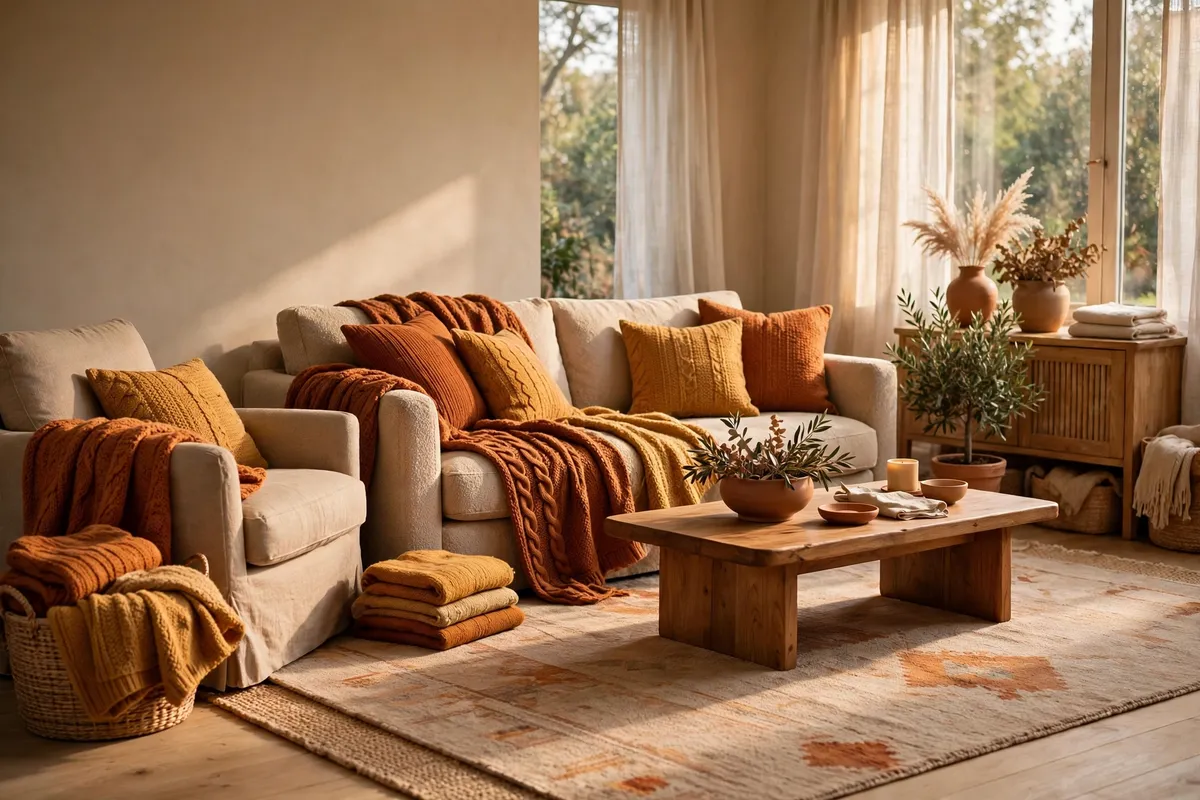
A large low-pile rug defines the seating zone, warms the floor and improves the sound. Throws and cushions in the room’s accent colour are the cheapest “designed” feeling available, and they make leather seating comfortable in both summer and winter.
37. Control the Temperature Like You Mean It

Caves fail on comfort more than on looks. A quiet fan for summer, a safe heater for winter and the dehumidifier from idea 4 keep the room usable all year. If the cave doubles as a guest space, the bedding advice in our wider Buying Guides section applies just as well down here.
Lighting and Décor Ideas
38. Layer Three Kinds of Light
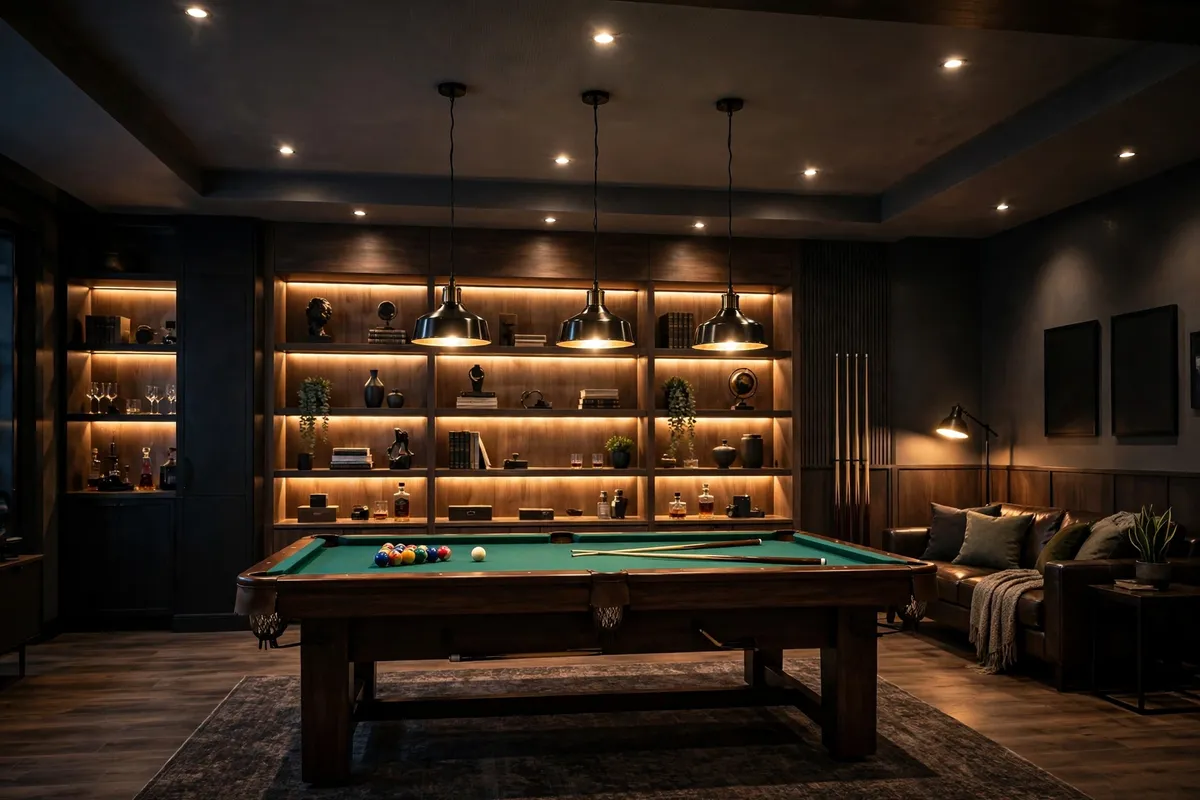
Professionals light in layers: ambient light for the whole room, task light over the bar and games, and accent light for shelves and walls. Put each layer on its own switch or smart control. Our LED recessed downlight review covers the ambient layer, and our LED flood light review is worth a look for garage caves and outdoor entrances.
39. Run LED Strips Behind Everything
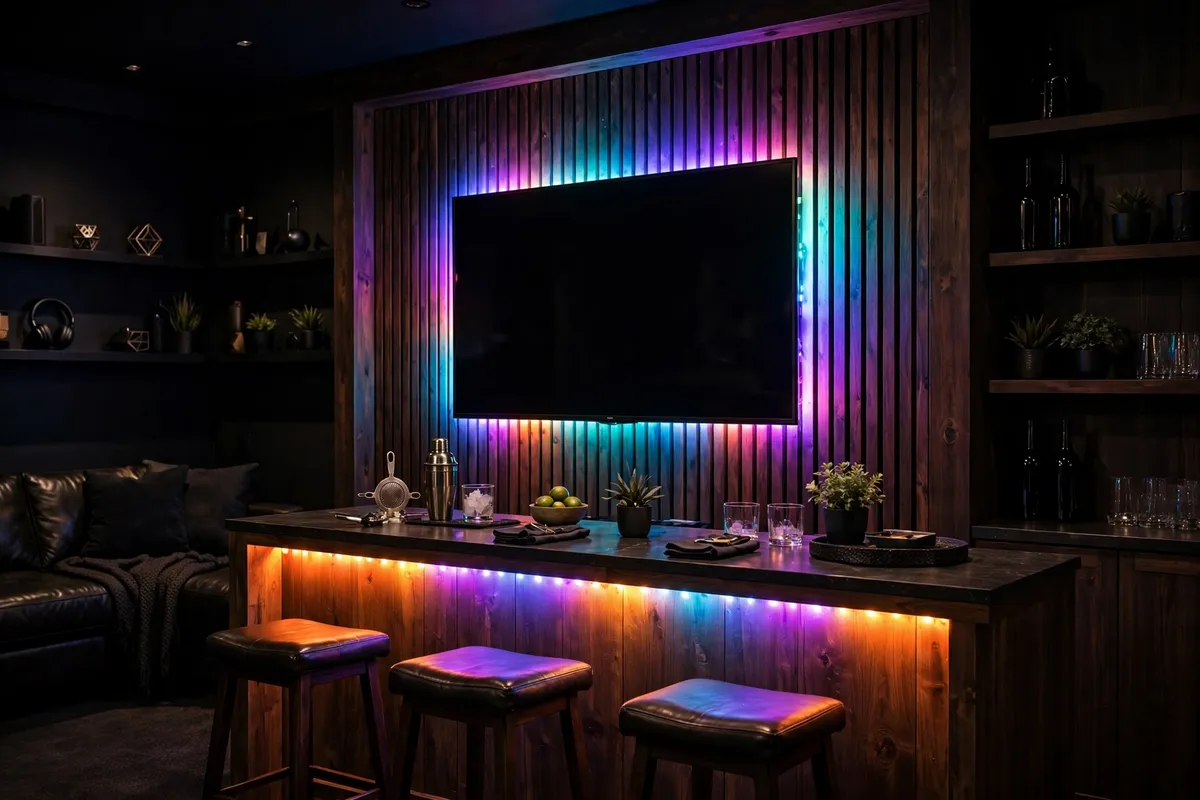
LED strip behind the TV, under the bar counter and along shelving kills screen glare, adds colour on demand and costs very little to run. Music-sync modes turn the whole room into part of the entertainment on party nights.
Our Pick: Govee RGBIC LED Strip Lights (16.4 ft)
Smart colour-changing strip lights with app control and music sync, able to show multiple colours on one strip. The single highest-impact lighting upgrade per pound or dollar spent.
40. Hang a Neon or LED Sign
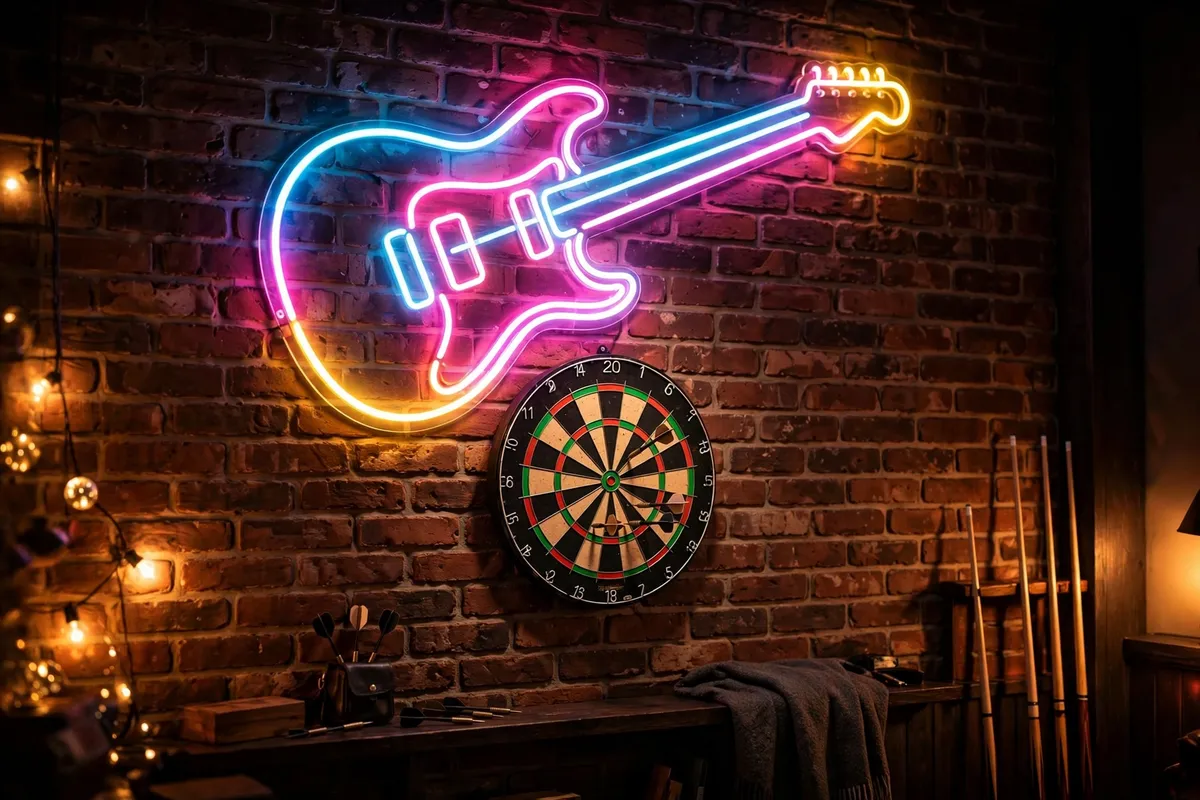
One sign, chosen well, becomes the room’s logo: your name, your team, your favourite bar slogan. Modern LED neon looks like glass neon, runs cool and sips power. For a softer rope-light version of the same effect, see our LED neon rope light review.
Our Pick: Welcome to Las Vegas LED Neon Sign
A vintage-inspired retro LED neon sign (16 x 10 in) from American Vintage Sign Co., made for game rooms, arcades and home bars. Instant theme, zero effort.
41. Pick a Theme and Commit to It
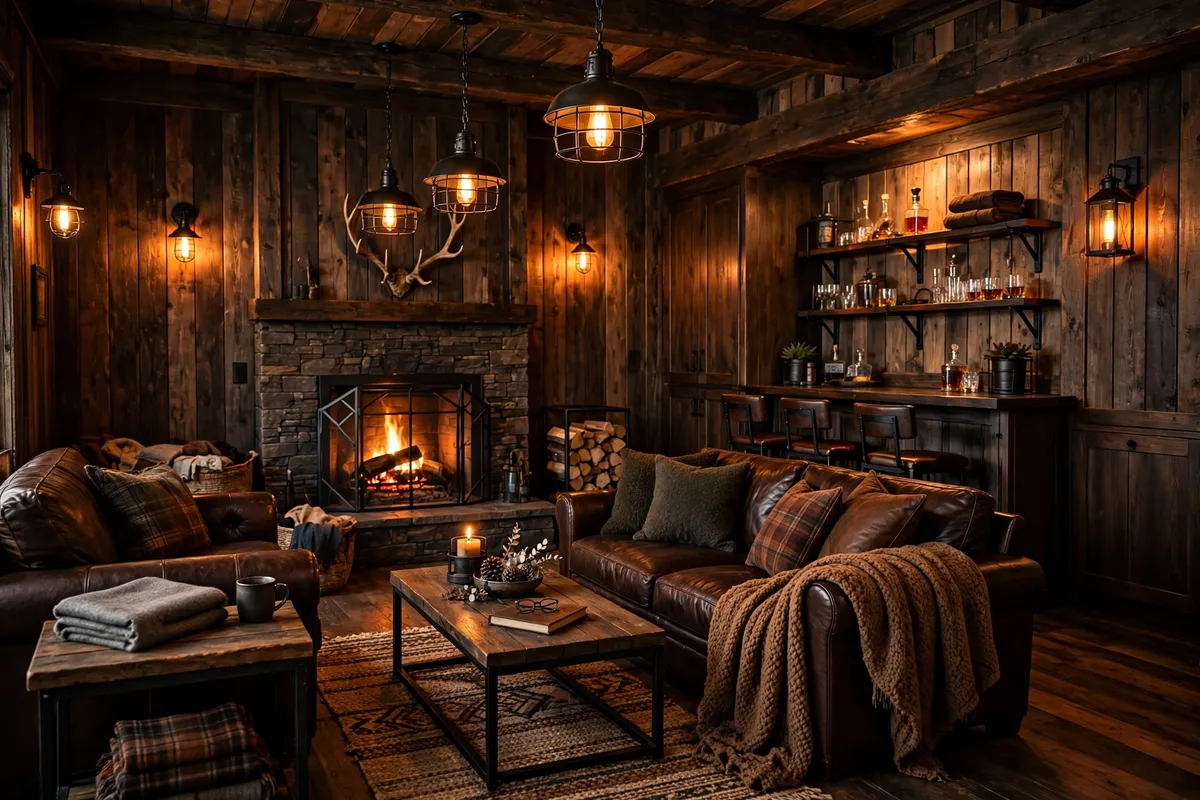
Rustic lodge, industrial, retro arcade, sports bar, gentleman’s library: any theme works if the room commits. Choose two main materials (for example dark wood and black metal) and one accent colour, then let every later purchase pass the test: does it belong in this room?
42. Use Dark, Confident Wall Colours
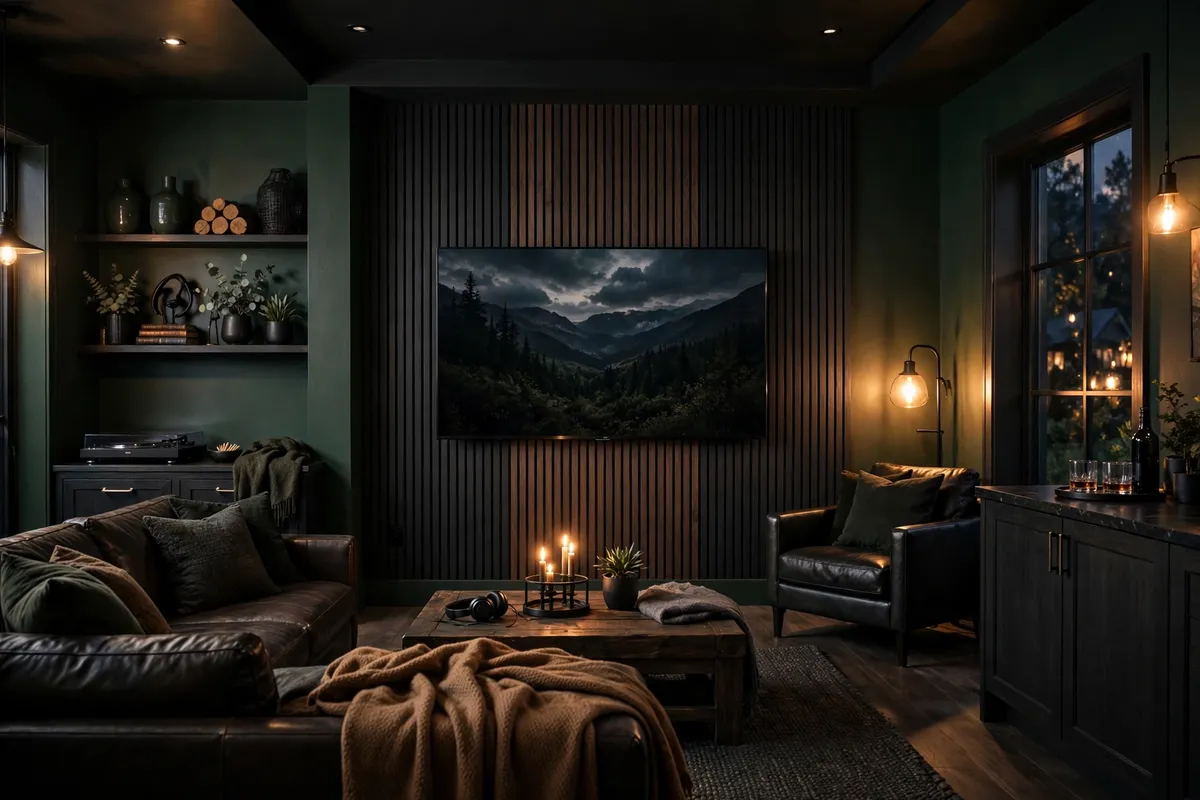
Deep green, navy, charcoal and warm black make screens look better, hide scuffs and feel like evening even at noon. If a full dark room feels risky, paint one feature wall behind the screen or bar and keep the rest mid-tone. Test with a large sample area first: cave lighting changes everything.
43. Display Collections on Floating Shelves
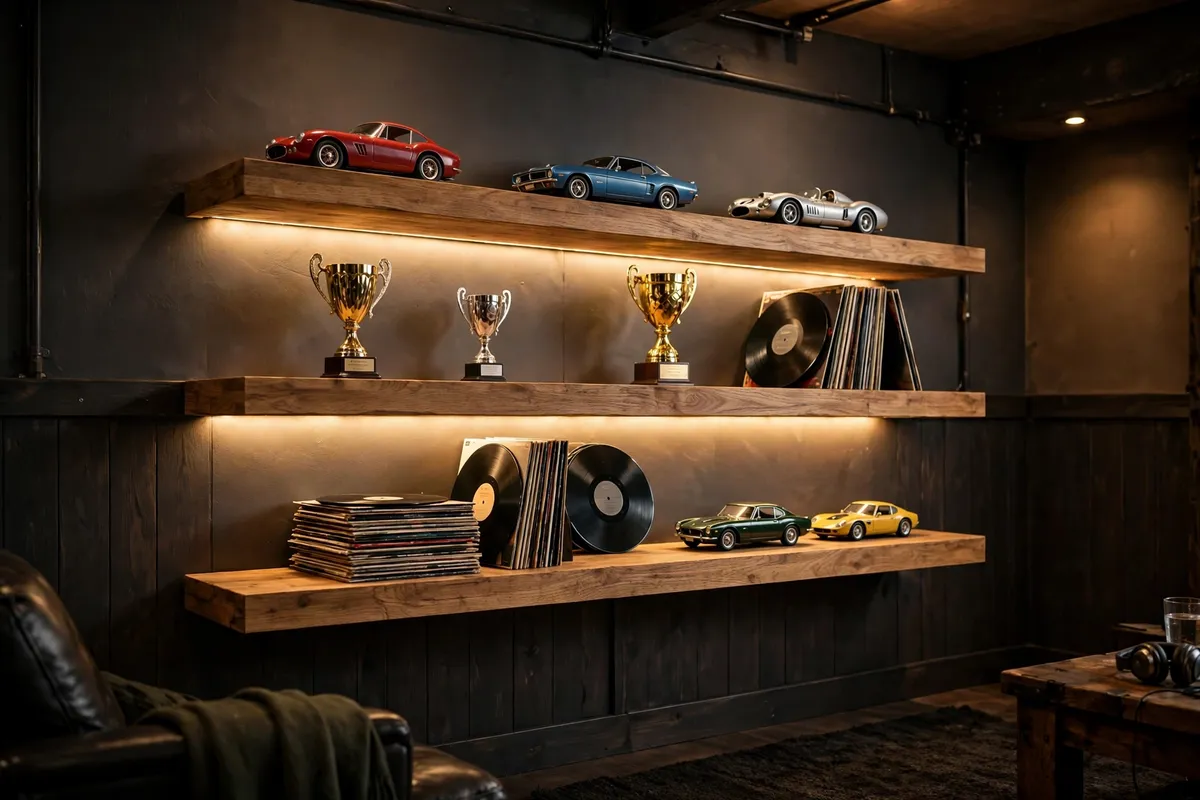
Vinyl, model cars, helmets, trophies, whisky bottles: floating shelves with under-shelf lighting turn collections into the décor. A pinboard alternative behind a desk area works the same way for tickets and photos; our corkboard alternative guide has tidy options that suit a cave office corner.
Music, Hobbies and Work-From-Cave Ideas
44. Build a Vinyl and Music Corner
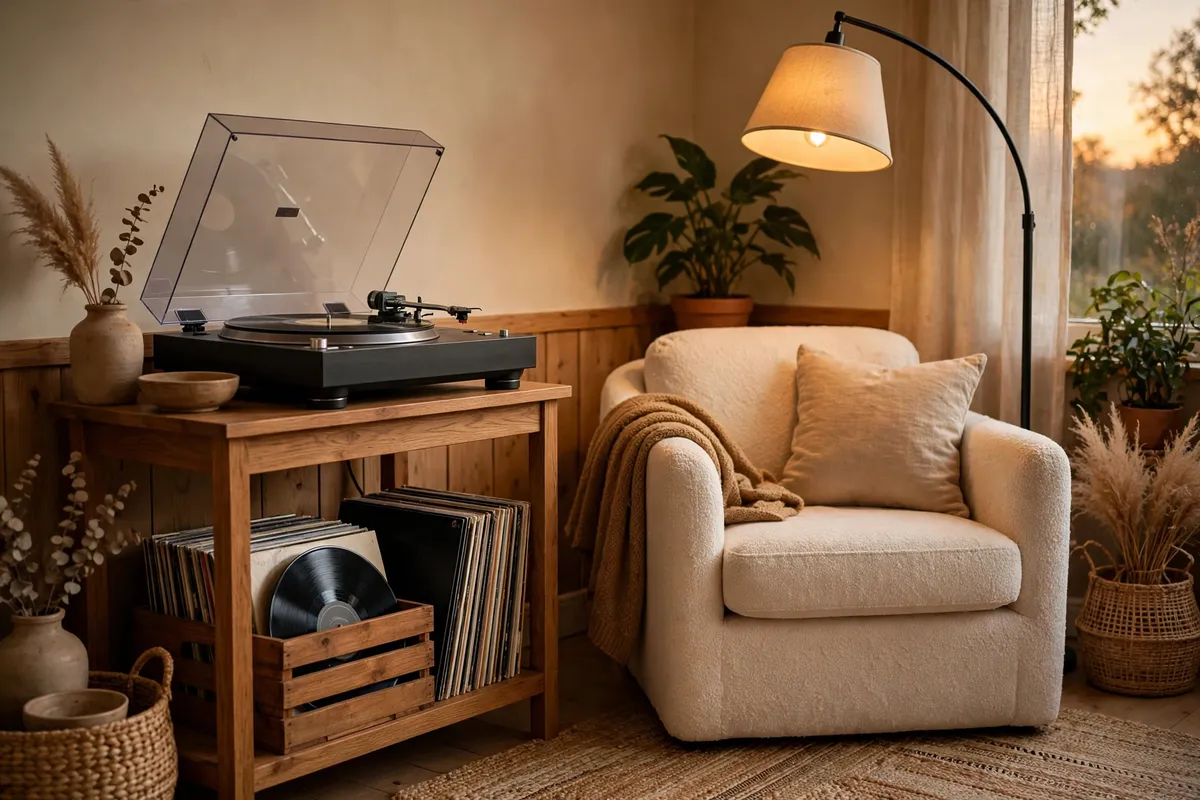
A turntable or a good Bluetooth speaker, a crate of records and one comfortable chair: the listening corner is the cave’s calm zone. Guitar players can go further; even a tiny practice amp like the one in our Orange Crush Mini amp review earns its shelf space.
45. Add a Proper Desk for Work and Hobbies
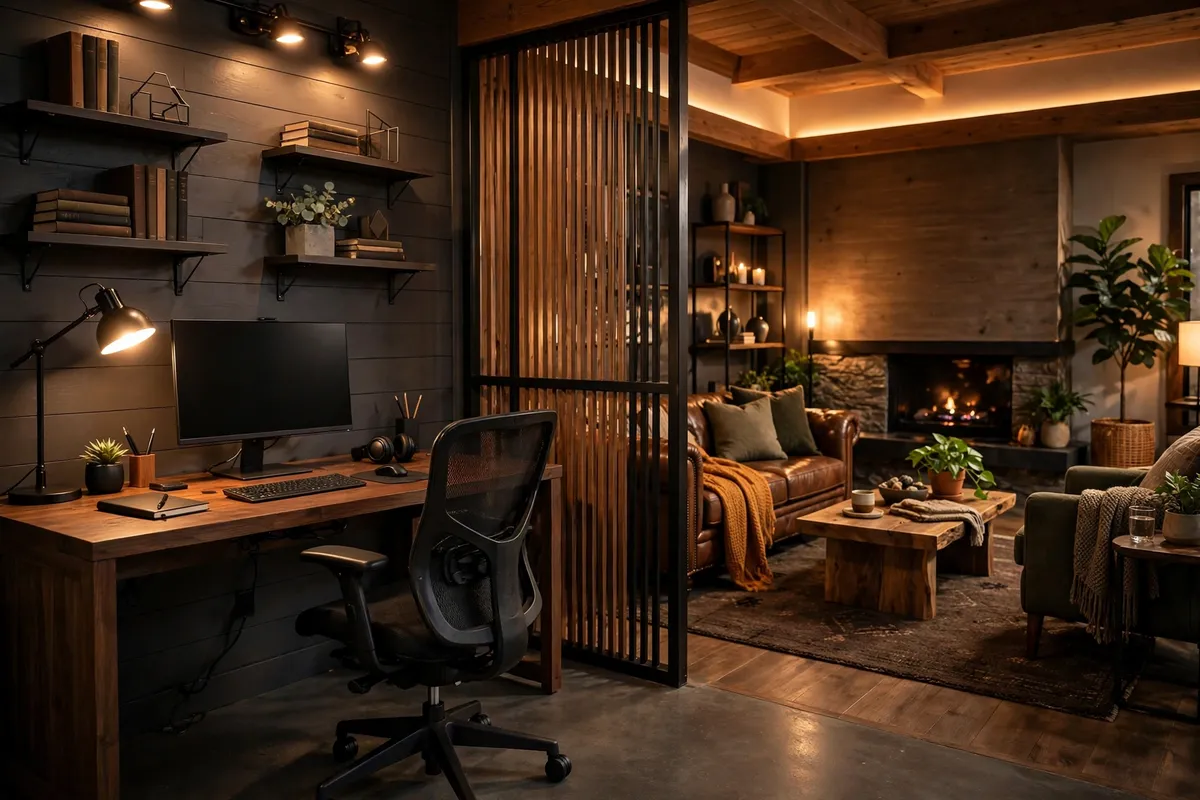
Many caves double as the home office or hobby bench. Give the desk its own zone and its own light, choose a chair you can sit in all day (our ergonomic mesh office chair review is a sensible start), and keep work visually separate from play so the room still feels like a reward at 6 pm.
46. Set Up a Hobby Bench for Models, Crafts and Repairs
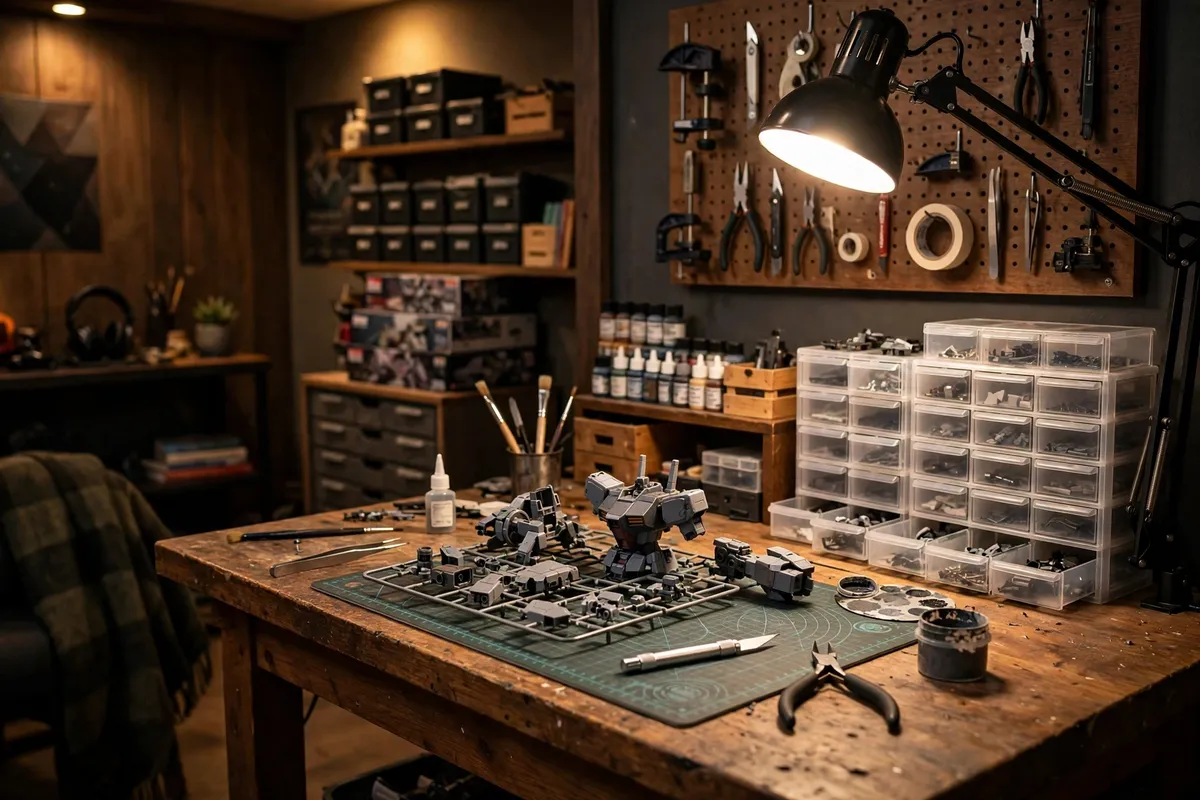
A sturdy bench, a task lamp and organised small storage turn the cave into a making space. Good task lighting is the difference between a hobby and a headache, as our light table guide shows for drawing and tracing work.
47. Convert the Garage Properly

A garage cave needs an insulated door, sealed floor and heating before anything fun. Hardware upgrades make a daily difference too; our magnetic garage door hardware guide covers a quick cosmetic win, and a painted or tiled floor finish is the single biggest visual upgrade a garage can get.
48. Create a Reading and Whisky Chair Corner

One leather chair, a floor lamp, a small side table and a bookshelf: the library corner is where the cave slows down. It needs the least space of any idea here and often becomes the owner’s favourite seat in the house.
Finishing Touches That Make It Feel Professional
49. Add Smart Control for Lights, Sound and Screen

One remote or voice command for “movie mode” (lights down, screen on, sound up) is the finishing touch guests never forget. Smart plugs and bulbs can retrofit most of it in an afternoon, and a strong router, as covered in our router reviews, keeps every device responsive.
50. Hang Real Art, Not Just Signs
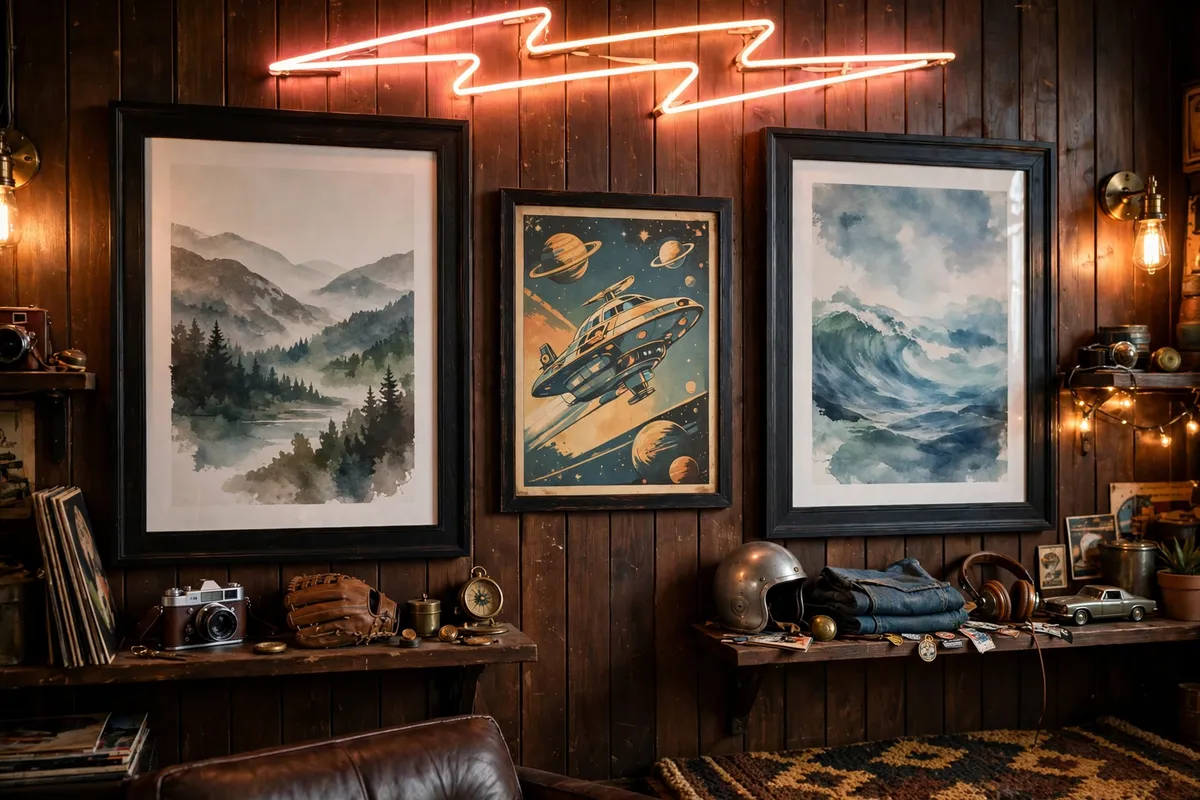
Mix the neon and memorabilia with one or two large framed prints or photos: a stadium panorama, a landscape from a favourite trip, a vintage film poster. Art at proper size (bigger than you first think) is what separates a designed room from a decorated one.
51. Give the Room a Signature Scent and Sound

Professionally finished rooms engage every sense. A candle or diffuser in cedar, leather or tobacco notes, and a low background playlist when the screens are off, make the cave feel occupied and intentional even on a quiet Tuesday.
52. Name Your Cave and Put It on the Door
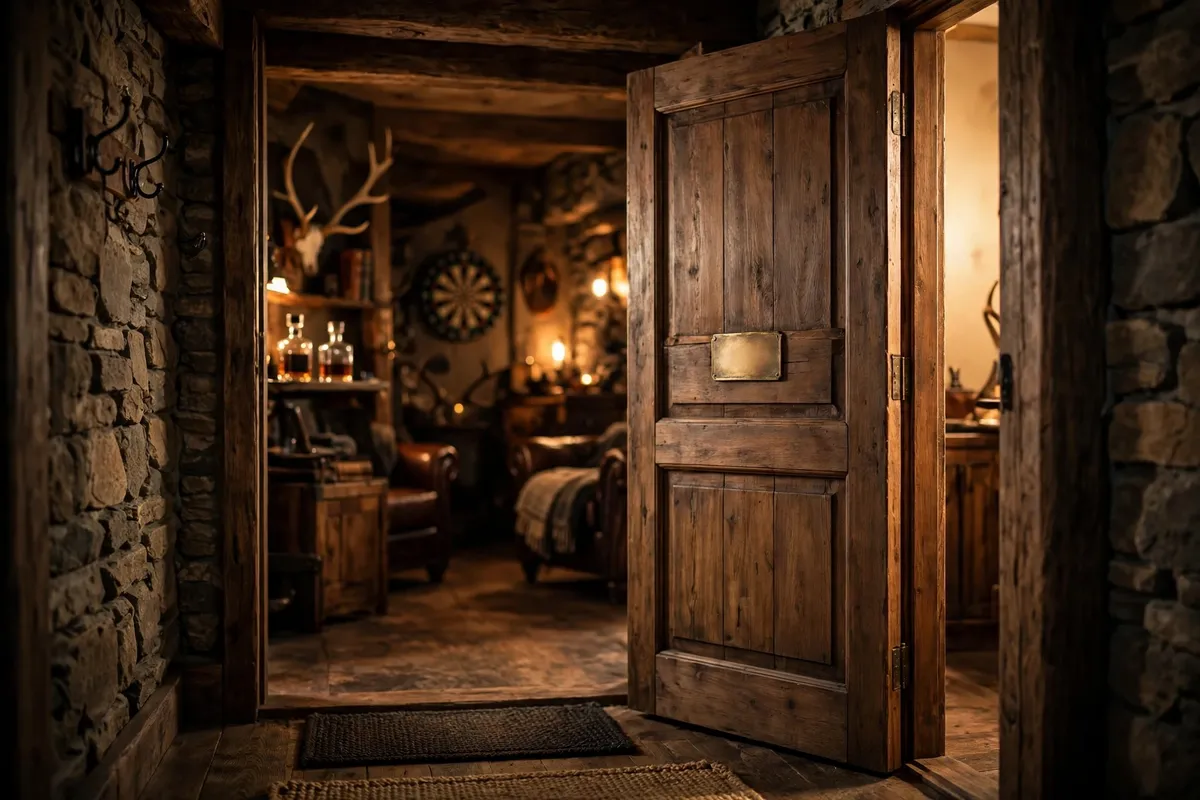
The final touch: a name. A small sign on the door or above the bar, with the year established, turns a spare room into a place with an identity. It costs almost nothing, photographs brilliantly, and officially finishes the project, at least until phase two.
Planning a cave of your own? Start with ideas 1 to 5, then pick one anchor from the bar, gaming or theater sections. Browse our latest reviews and buying guides for the research behind every product mentioned here, and learn more about Home Tranquil and how we test.
Frequently Asked Questions
How much does a man cave cost?
Anything from a few hundred for a corner setup (chair, LED lighting, a sign and a mini fridge) to five figures for a full basement conversion with a bar, projector and tiered seating. Phasing the build, as in idea 5, spreads the cost and lets you enjoy the room at every stage.
What is the best room to turn into a man cave?
The one you can claim permanently. Basements are popular for size and separation, garages work well once insulated, and a spare bedroom makes an excellent gaming or theater cave. Loft conversions are superb for cinema rooms because the roof shape swallows a big screen.
How do I keep a basement man cave dry and comfortable?
Fix water ingress first, then run a correctly sized dehumidifier, insulate walls and floor, and add gentle background heating. Our dehumidifier reviews explain sizing in plain terms.
Do I need planning permission or permits?
Furniture and décor need none. Structural changes, new plumbing, electrical work and garage conversions may need permits or inspections depending on where you live; check your local rules before starting building work, and use qualified trades for electrics and plumbing.
As an Amazon Associate, this site earns from qualifying purchases. Prices and availability change; check the Amazon product page for the latest details. Questions about this guide? Contact us.